Jovanotti Turns 60: 8 Curiosities About an Artist Always Seeking More
Lorenzo Cherubini, the Italian artist known as Jovanotti, celebrates 60 years. From his beginnings as a DJ to becoming a genre-defying musical figure, his career is full of unexpected turns and social commitments.
ByMerry Melina7 min read
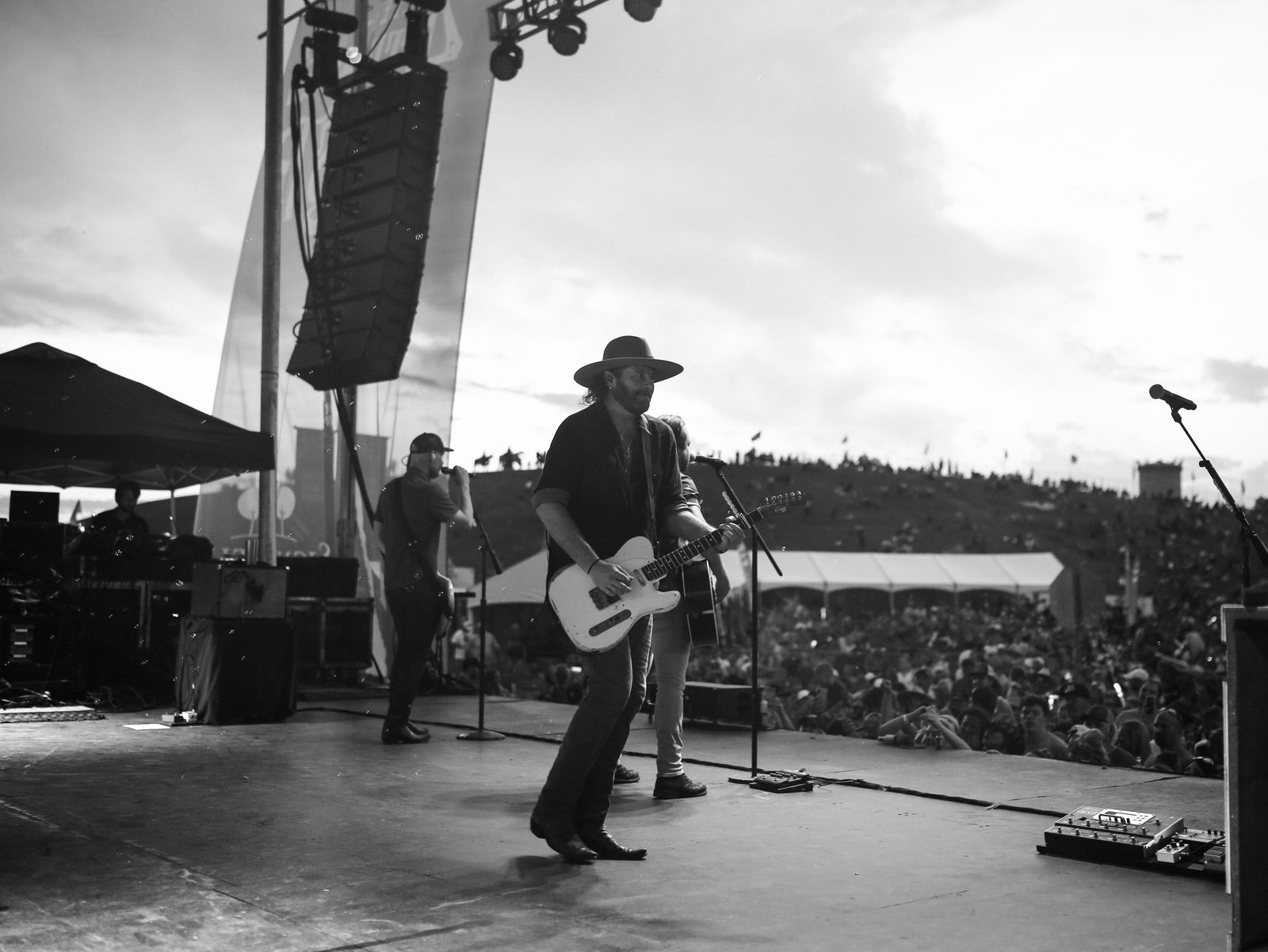
When you listen to Jovanotti, it's hard to put him in a box. Is it pop? Hip hop? Funk? World music? The truth is, Lorenzo Cherubini, the artist behind the name, has spent decades doing exactly what he wants, never afraid to change. As he approaches his 60th birthday, it's a great time to look back at some of the curiosities that have shaped his career. From his early steps in nightclubs to his biggest stadium concerts and his activism, Jovanotti has shown us that music, like life, can be an adventure without labels.
A Musician Who Breaks Genres
One of the most striking things about Jovanotti is how difficult it is to define his musical style. Although many consider him a pioneer of rap and hip hop in Italy, his sound goes far beyond, blending influences from funk, melodic pop, and even ethno-fusion rhythms. This versatility, which he has refined over almost 20 years, according to his Wikipedia biography, is a constant in his work.
From his early hits with a distinct "disco" sound to more complex productions like "L'albero" (1997), which blended Afro-Latin rhythms, popular music, funk, rock, and hip-hop, Jovanotti has repeatedly shown that he doesn't like to stay in one place. This eagerness to evolve is what, for many, has cemented his reputation as "the most important Italian musician of his generation," as noted in his Wikipedia profile. It's a capacity for reinvention we see in great artists, as we explored in our piece on Julie London.
From Disco DJ to Italian Icon
Before filling stadiums and earning MTV nominations, Jovanotti took his first steps in music in a common way for many artists of his generation: as a DJ. After completing his science studies, Lorenzo Cherubini worked spinning records in various nightclubs and venues in Rome. This job not only gave him a solid foundation in the music world but also led him to radio and, from there, to start creating his own music, as detailed in his Wikipedia biography.
This origin on the dance floor is evident in his early albums, which featured a very rhythmic and danceable sound. It was a period of experimentation that laid the groundwork for everything that came after, marking the beginning of a career that would make him one of the most recognized and beloved figures in Italian music.
His Soleluna Production Company: A Breeding Ground for Ideas
For Jovanotti, music isn't just about performing or composing, but also about creating a space for other talents. In 1994, a pivotal year in his career, he founded his own production company, "Soleluna." This wasn't just a business, but a true laboratory of ideas and a haven for the musicians who regularly accompanied him — such as Saturnino, Michele Centonze, Giovanni Allevi, and Pier Foschi — to develop their own solo projects. His Wikipedia biography explains this.
Soleluna is a clear example of his collaborative vision and his commitment to the artistic community. Beyond his own career, Jovanotti has always sought to uplift others, creating an environment where creativity can flourish without constraints.
Beyond Music: Writer and Painter
If there's one thing that characterizes Jovanotti, it's his multifaceted nature. He hasn't limited himself to being a singer and songwriter but has explored other forms of artistic expression. In 1994, the same year he launched his production company, he also published his notebook "Cherubini," showcasing his writing side. But he didn't stop there: in 1998, he added another milestone to his career by presenting a painting exhibition in Brescia, as mentioned on Wikipedia.
These forays into literature and visual arts demonstrate that his creativity knows no bounds. For Jovanotti, each new medium is an opportunity to communicate and explore ideas, confirming that he is an artist in the broadest sense of the word.
The "Lorenzo + Year" Signature: A Personal Brand
If you're a Jovanotti fan, you might have noticed a pattern in many of his albums: until 2005, the album titles often featured his given name, Lorenzo, followed by the release year. Albums like "Lorenzo 1992," "Lorenzo 1994," "Lorenzo 1997," and "Lorenzo 1999 - Capo Horn" are examples of this peculiar custom, according to the discography detailed on Wikipedia.
This way of naming his works became a kind of signature, a personal brand that directly connected his identity with his music and the moment each project came to light. He stopped this practice with "Buon Sangue" in 2005, marking a shift in his album titling dynamic.
Connecting with Latin America: From the 90s to Today
Jovanotti's music not only resonated in Italy and Europe; it also crossed the Atlantic to reach Latin America. As early as 1990, his album "Giovani Jovanotti" caught attention in Spain and Latin America with a Spanish-language edition that included rhythmic hits like "Los números" and the anthem "Gente de la noche," widely chanted in the region, according to Wikipedia.
Although a later attempt to establish himself in the Spanish market with the compilation "Pasaporte" (2001) didn't achieve the expected success, his relationship with the continent continued. Years later, in September 2013, he performed concerts in Brazil and Argentina as the closing act of his "Lorenzo negli stadi" tour. His two recitals at the Teatro Vorterix in Buenos Aires marked his first professional presentation to the local audience. A year later, in April 2014, he participated in the Estéreo Picnic Festival in Colombia, solidifying his presence in the region.
The "Crooner" Tour in the United States
Having regained success in Europe with albums like "Safari" (2008), Jovanotti sought a new challenge. In 2009, he embarked on a unique adventure through small concert halls on the East Coast of the United States. Accompanied by his regular musicians, such as Saturnino Celani and Riccardo Onori, he adapted his repertoire for the occasion, including covers of classics like "Staying Alive" by the Bee Gees and "Wanna be Startin' Something" by Michael Jackson, as described in Wikipedia.
This experience showcased him in a more intimate and different light, almost like a "crooner," where the energy was conveyed differently due to the intimate conditions of the stages. The result was the work "Oyeah," released via iTunes and initially marketed in the U.S., featuring a surprising reinterpretation of the classic "Buonasera signorina."
Social Activism: A Voice for Third-World Debt Relief
Jovanotti has used his platform not just for music but also for social causes. Since the late 1990s, he intensified his political advocacy. He has consistently published articles on his blog and in major Italian newspapers, and has performed special acts to call for the cancellation of third-world debt, a commitment mentioned in his Wikipedia profile.
This more committed side shows that, for him, being an artist also means being a voice for those who don't have one, using his influence to bring important issues to the forefront and mobilize people. His music, often joyful and danceable, coexists with a deep concern for the world around him.
Why it matters
Jovanotti is more than just a singer; he is a cultural phenomenon who has continually reinvented himself. Turning 60 is an opportunity to look back and see how he has managed to maintain his relevance and freshness, never settling for what has already been done. His ability to fuse genres, his social commitment, and his artistic curiosity make him an example that creativity has no age or defined limits, inspiring millions to follow their own path.
Script for your video
Runs about 52 secMake short videos? This script sums up the story so you can read it off your teleprompter and record a Reel, a Short, or a TikTok.
Title for your video
Jovanotti turns 60: The musical chameleon who never stops!
How to use it
- 1Pick the length — 1 or 2 minutes — and tap “Copy script.”
- 2Paste it into the teleprompter app on your phone, or read it off the screen.
- 3Record vertically and post it to Reels, Shorts, or TikTok.
It's free to use, and you can monetize your video. We only ask that you say where you read it: the script already ends with “The full story is on losupe.com.”
Sources
TopicsJovanottiItalian MusicHip HopPopCuriosities