Thích Nhất Hạnh: 10 Fascinating Facts on His 100th Birth Anniversary
This October 11th would have marked 100 years since the birth of Thích Nhất Hạnh, the Vietnamese Zen master who brought mindfulness to the Western world. His life, shaped by war and exile, was dedicated to peace and compassion.
ByMerry Melina7 min read
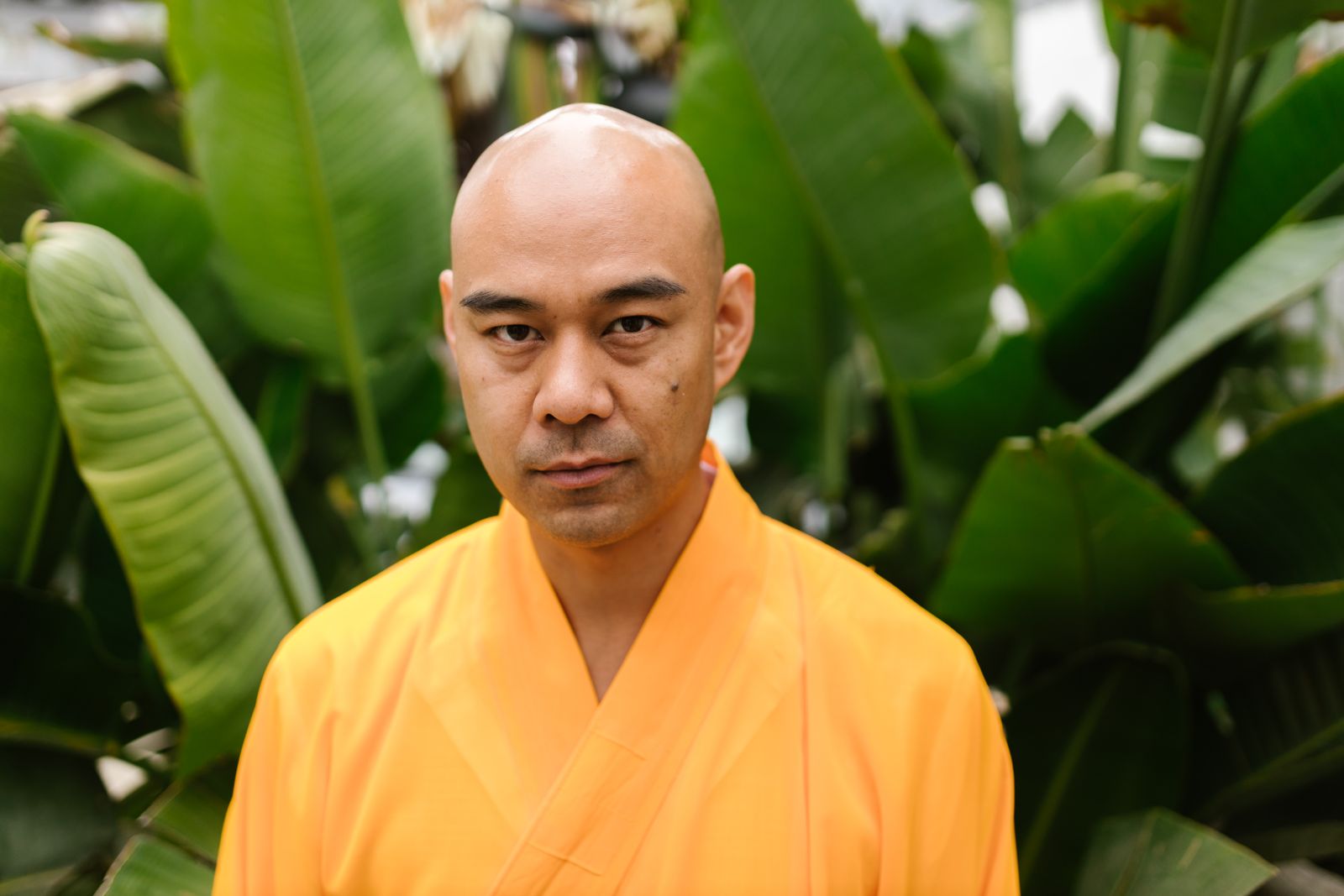
This October 11, 2026, would have marked 100 years since the birth of Thích Nhất Hạnh, the Vietnamese Zen master who passed away in 2022. His name resonates as a voice of peace and wisdom in an often chaotic world.
From his youth, Thích Nhất Hạnh dedicated his life to Buddhist practice and social activism. He was a bridge between East and West, bringing the teachings of mindfulness and compassion to millions of people. His story is a powerful reminder of how inner serenity can inspire profound change in the external world. Here are ten fascinating facts about his life.
1. He was nominated for the Nobel Peace Prize by Martin Luther King Jr.
One of the most impactful stories of his life is his connection with Martin Luther King Jr. In 1965, Thích Nhất Hạnh wrote a letter to King, urging him to publicly oppose the Vietnam War. They met in 1966, forging a friendship based on their commitment to non-violence and justice.
A year later, in 1967, King nominated Thích Nhất Hạnh for the Nobel Peace Prize. He highlighted his humanitarian work and concrete proposals for peace in Vietnam, recognizing the immense value of his work during a time of great conflict, according to Wikipedia. Although he did not receive the award that year, King's nomination is a powerful testament to his impact.
2. His monastic journey began at the age of 16
Thích Nhất Hạnh, whose birth name was Nguyễn Xuân Bảo, was born in Huế, French Indochina, on October 11, 1926. From a very young age, he showed a deep spiritual inclination.
At 16, he decided to enter the Từ Hiếu monastery, near his hometown, where he began his studies under the guidance of Zen Master Thanh Quý. He was ordained a monk in 1949, marking the formal beginning of a path that would lead him to become one of the most influential Buddhist masters of our time, as detailed in Wikipedia.
3. He founded key institutions for Vietnamese Buddhism
During the 1950s and early 60s, Thích Nhất Hạnh not only dedicated himself to personal practice but also worked tirelessly to revitalize and modernize Buddhism in Vietnam.
In 1956, he became editor-in-chief of Vietnamese Buddhism, the newspaper of the Unified Buddhist Association of Vietnam. Additionally, he founded the Lá Bối publishing house, the Vạn Hạnh Buddhist University in Saigon, and the School of Youth for Social Service (SYSS), an organization of Buddhist activists working for peace and social development in rural areas most affected by the war, explains Wikipedia.
4. He studied in the United States on a Fulbright scholarship
In 1960, Thích Nhất Hạnh received a Fulbright scholarship, which allowed him to travel to the United States to study comparative religion at the prestigious Princeton University. During his stay, he also taught at Columbia University.
This period was fundamental for him, as it allowed him to directly experience Western culture and, at the same time, express his deep concern for the war that was bleeding his country. It was in this context that his pacifist activism began to take a more global form, according to Wikipedia.
5. He was exiled from Vietnam for his pacifist activism
Thích Nhất Hạnh's stance against the Vietnam War came at a high cost. In 1966, the South Vietnamese government forbade him from returning to his country due to his peace activism. Interestingly, he was also exiled by the North Vietnamese government for refusing to take sides in the conflict.
This double condemnation made him a true stateless advocate for peace. He was granted asylum in France, where he lived with other Vietnamese refugees and continued his tireless work. His story reminds us of the price sometimes paid for defending non-violence in times of conflict, as we covered in this article about another figure also celebrating a centenary.
6. He founded Plum Village, a global Buddhist center in France
After his exile, Thích Nhất Hạnh settled in France and continued his teaching and activism. In 1982, he founded Plum Village, a monastery and Buddhist practice center in Dordogne, southern France. This place became the heart of his international community, attracting thousands of followers from all over the world.
Under his leadership, the Plum Village tradition expanded, establishing monasteries and practice centers also in the United States (such as Deer Park in California and Blue Cliff in New York) and in Germany. These centers offer a refuge for meditation and learning his teachings, as explained in Wikipedia.
7. He returned to Vietnam after 39 years of exile, but with controversy
After nearly four decades in exile, Thích Nhất Hạnh was allowed to return to Vietnam for visits in 2005 and again in 2007. These trips were very emotional for him and his followers, but they also generated some controversy.
Some Vietnamese Buddhist groups accused him of collaborating with the communist government, which added a layer of complexity to his return. In 2014, Thích Nhất Hạnh permanently returned to Vietnam to live his final days at his home temple, Từ Hiếu, near Huế, according to Wikipedia.
8. A stroke left him unable to communicate verbally
In November 2014, Thích Nhất Hạnh suffered a severe cerebral hemorrhage that left him hospitalized with serious after-effects. He spent months in rehabilitation in France and then in San Francisco, California, seeking more intensive recovery.
Despite efforts, the stroke left him unable to communicate verbally for the rest of his life. In 2018, at 92 years old, he expressed his wish to return to Vietnam through gestures, where he lived his final years at Từ Hiếu temple until his passing in 2022, as described in Wikipedia.
9. He was a prolific author and the great popularizer of mindfulness in the West
Thích Nhất Hạnh was a tireless writer, with over a hundred books published, many translated into more than 40 languages. His works have become cornerstones for those seeking inner peace and a more conscious life.
His teachings focused on the practice of mindfulness, meditation, non-violence, and compassion. He was instrumental in bringing these practices to Western audiences, making them accessible and relevant for modern life. Titles like The Miracle of Mindfulness and Peace Is Every Step are just a few examples of his vast contribution, as you can see in Wikipedia's works section. If you enjoy lists of curiosities, you can read 7 curiosities you might not know about Jeanette.
10. He coined the term "Engaged Buddhism" and the concept of "interbeing"
Beyond meditation, Thích Nhất Hạnh developed ideas that transformed how Buddhism is understood in the contemporary world. He coined the term "Engaged Buddhism" to describe a practice that does not isolate itself but actively engages in social issues and seeks peaceful solutions to conflicts, according to Wikipedia.
He also introduced the concept of "interbeing," which emphasizes the profound interconnectedness of all things and the absence of a separate self. This idea, rooted in Zen philosophy, invites us to see how each of us is intrinsically linked to the rest of the world, fostering compassion and collective responsibility.
Why it matters
Thích Nhất Hạnh was not just a spiritual teacher; he was a visionary who taught us to find peace amidst chaos and to extend that peace to the world. His legacy of mindfulness, compassion, and engaged activism continues to inspire millions to live more consciously and work for a more harmonious future. On the 100th anniversary of his birth, his message is more relevant than ever.
Script for your video
Runs about 41 secMake short videos? This script sums up the story so you can read it off your teleprompter and record a Reel, a Short, or a TikTok.
Title for your video
Thích Nhất Hạnh: 100 Years of Peace and Mindfulness
How to use it
- 1Pick the length — 1 or 2 minutes — and tap “Copy script.”
- 2Paste it into the teleprompter app on your phone, or read it off the screen.
- 3Record vertically and post it to Reels, Shorts, or TikTok.
It's free to use, and you can monetize your video. We only ask that you say where you read it: the script already ends with “The full story is on losupe.com.”
Sources
TopicsThích Nhất HạnhBuddhismmindfulnesspeaceactivism