Economic Sanctions: A Guide to Understanding Their Impact on a Country
Economic sanctions are a powerful tool in international politics. From trade restrictions to financial blockades, understanding them is key to grasping their impact on economies and people's lives.
ByPedro Llerena5 min read
When we hear news about international conflicts, economic sanctions often come up as one of the first responses. But do we really know what they are and how they work? The recent situation between the United States and Iran provides a clear example of how these measures can impact a country's economy and its people's lives.
Recently, the Iranian rial hit a new historic low, reaching 2.02 million per US dollar in informal currency markets, while the official rate from Iran's Central Bank was 1.5 million per dollar, as reported by Clarín. This drop comes as Washington prepares to announce new and stronger sanctions against Tehran. US Treasury Secretary Scott Bessent described them as an “economic D-Day” in an opinion piece in the Financial Times, stating that President Trump has “decimated Iran’s economy.”
What Are Economic Sanctions?
Economic sanctions are measures that one country, or a group of countries, imposes on another to pressure it to change its behavior. Think of them as a form of punishment or deterrence that seeks to affect the target country's economy without resorting to direct military conflict. They are not new; they have been used for centuries, but in the modern era, with such interconnected economies, their reach can be enormous.
Why Are Sanctions Imposed?
Countries typically impose sanctions for several reasons:
- To change policies: The main goal is to force the sanctioned country to modify an internal or external policy deemed unacceptable, such as nuclear weapons development or human rights violations.
- Punishment: Sometimes, they are simply used to punish a country for past actions, aiming to weaken its economic or political capacity.
- Deterrence: They can also serve to deter other countries from following a similar path, demonstrating the consequences of certain actions.
- Economic pressure: In Iran's case, for example, the US seeks to increase economic pressure to gain concessions, although it has not succeeded so far, as Clarín noted.
Common Types of Sanctions
Sanctions are not a single type of measure; there are many ways to apply them, and they are often combined for greater impact:
- Trade sanctions: These include embargoes (total bans on trade), restrictions on importing or exporting certain products, or high tariffs. For example, the United States might prohibit the sale of technology to a country or the purchase of its oil. You can read more about how these tools are used in our article on trade wars.
- Financial sanctions: These are among the most effective. They can include freezing assets of individuals or entities, prohibiting international banking transactions, or excluding a country from the global banking system, like SWIFT.
- Sectoral sanctions: These target specific industries, such as energy, defense, or mining. This aims to limit the country's main sources of revenue.
- Individual sanctions: These target specific people (political leaders, business owners) or companies, prohibiting them from traveling or freezing their assets.
How Do Sanctions Affect a Country?
When a country is sanctioned, the impact can be broad and felt at different levels:
Currency and inflation
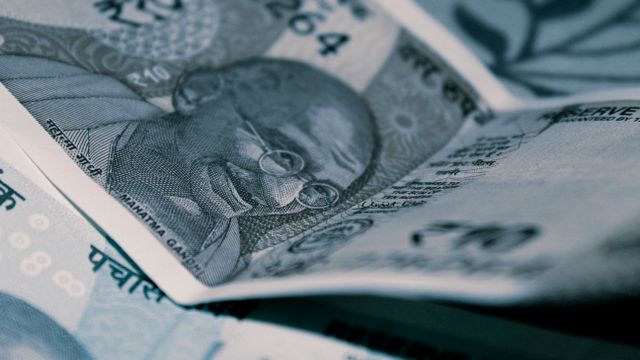
One of the first things to suffer is the national currency. Sanctions can make it difficult for the country to sell its products abroad or access foreign currency, such as the dollar. This causes the local currency to rapidly lose value, which in turn makes imports more expensive and fuels inflation. In Iran, for example, the currency was already facing pressure with double-digit inflation even before the current conflict, according to Clarín.
Foreign trade and market access
Sanctions can cut off trade routes and make it difficult for companies in the sanctioned country to do business abroad. A recent example is the United Arab Emirates, which announced the suspension of all commercial activity with Iran after communication between President Trump and Sheikh Mohammed bin Zayed Al Nahyan, as reported by Clarín. This is significant because the UAE has long been a key trading partner and a major source of imports for Iran.
The lives of ordinary people
While sanctions are often directed at governments, they frequently end up affecting the population. Shortages of products, rising prices, and difficulty accessing medicines or basic goods can deteriorate citizens' quality of life.
Challenges and Unintended Consequences
Sanctions are not a magic solution and often have side effects or unintended consequences:
- Secondary sanctions: The United States, for example, has promised secondary measures against countries that continue to do business with Iran, according to Scott Bessent in Clarín. This means that not only the target country is punished, but also third countries that do not comply with the restrictions.
- Search for alternatives: Sanctioned countries often seek new trade routes or partners. In the case of Iran and Oman, both countries are in the final stages of an agreement to jointly manage the Strait of Hormuz, a crucial waterway through which one-fifth of the world's oil passes in peacetime, according to Clarín. You can learn more about the Strait of Hormuz and its impact in this guide.
- Hardening of stances: Instead of yielding, some governments may harden their stance. Mohsen Rezaei, leader of Iran's Supreme National Security Council, warned on X that any support for US sanctions would be considered an “act of war,” as reported by Clarín.
Why It Matters
Economic sanctions are much more than news headlines; they are a complex tool with far-reaching and real consequences. They affect everything from a currency's value to the availability of basic goods, shaping international relations and the daily lives of millions of people. Understanding how they work helps us better interpret global events and the delicate balance of power in the world.
Script for your video
Runs about 2 min 42 secMake short videos? This script sums up the story so you can read it off your teleprompter and record a Reel, a Short, or a TikTok.
How to use it
- 1Pick the length — 1 or 2 minutes — and tap “Copy script.”
- 2Paste it into the teleprompter app on your phone, or read it off the screen.
- 3Record vertically and post it to Reels, Shorts, or TikTok.
It's free to use, and you can monetize your video. We only ask that you say where you read it: the script already ends with “The full story is on losupe.com.”
Sources
Topicseconomic sanctionsIranUnited Statesglobal economyinternational politics