10 Curious Facts About Markets and Fairs That Go Beyond Buying and Selling
Explore how history, culture, and even geography have shaped the markets and fairs we know today. From a Colombian city founded on Three Kings' Day to indigenous economic models prioritizing collective work, these stories will make you see commerce differently.
ByPedro Llerena8 min read
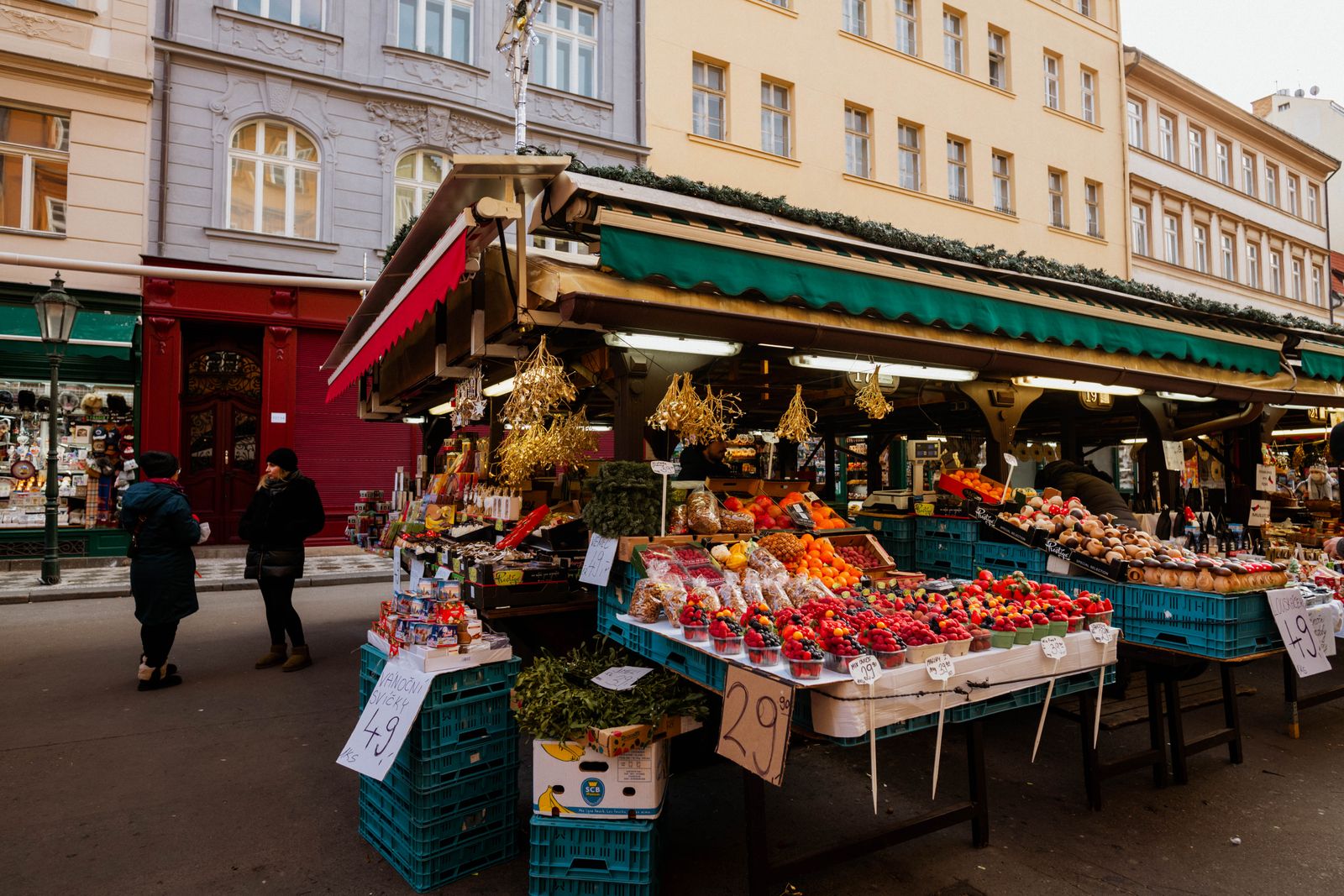
Markets and fairs are much more than just places to buy and sell. They are the heart of our communities, sites where history, culture, and even politics intertwine with daily life. Sometimes, they hold secrets and details that almost no one knows, but which help us better understand how the world works and how we relate to each other.
We want to share some of these curiosities with you, unexpected facts that will make you see markets and fairs in a different way, as a fascinating reflection of society.
1. The City Born on Three Kings' Day: Valledupar and its Original Name
Valledupar, today the capital of the Cesar department in Colombia, has a longer, more history-rich name: Ciudad de los Santos Reyes del Valle de Upar (City of the Holy Kings of the Upar Valley). It received this name from Capuchin friars because it was founded on January 6, 1550, a date that coincides with the celebration of Three Kings' Day, a deeply rooted holiday in many cultures. This detail, as noted by Wikipedia, reminds us how religious dates and traditions can mark the origin and identity of a place.
This unique name is not just a historical curiosity. It also tells us how the founding of cities, with their initial celebrations, were the first major events that functioned as fairs, attracting people and goods from the surrounding areas. It was a time to establish connections, celebrate, and lay the foundations for a new community that, over time, would become an important point of exchange.
2. When a Music Festival Moves Thousands and Boosts the Local Economy
Valledupar is not only known for its name but also for being the World Capital of Vallenato. Every year, the city becomes the epicenter of a huge event: the Festival de la Leyenda Vallenata (Vallenato Legend Festival). Thousands of people, both from Colombia and abroad, travel there to enjoy the music, culture, and local traditions, as explained in the city's information.
This festival is a perfect example of how a fair, in this case, a cultural and musical one, can have a huge impact on a place's economy. It's not just a show; it's a driver that generates sales, employment, and visibility for the entire region. It's a market of experiences, where music is the main product, but around it, a trade in all kinds of services and goods flourishes, from gastronomy to hospitality.
3. Beyond Folklore: How Agricultural Markets Sustain a Region
While vallenato brings global fame to Valledupar, the city also serves as a crucial center for agricultural, agro-industrial, and livestock production in northern Cesar and southern La Guajira. This shows us a more traditional and essential facet of markets: agricultural ones.
These markets are the backbone of the local economy. They are not just points of sale but also meeting places for farmers, ranchers, and traders. Here, prices are set, trusting relationships are established, and food and basic products are ensured to reach thousands of families' tables. They remind us that, beyond technology and trends, the exchange of farm products continues to be a vital force in our societies, a topic we also explore in this article.
4. Geography Shaping Trade: Valledupar's Strategic Secret
A city's geographical location can be its greatest commercial asset, and Valledupar is a good example. The city lies in the Cesar River valley, flanked by the imposing Sierra Nevada de Santa Marta and the Serranía del Perijá mountain ranges. Furthermore, it is situated midway between Colombia's two largest coal mining basins: Cerrejón to the north and the La Loma-La Jagua mining complex to the south, as detailed by Wikipedia.
This combination of geographical elements—mountains, rivers, and strategic natural resources—has historically made it a hub for communication and trade. It's no coincidence that markets flourish where there's ease of transporting goods and access to resources. Geography not only defines the landscape but also the routes of exchange and business opportunities.
5. The "Cold Water" That Attracted Early Exchanges in a Valley
The name of the Guatapurí River, which flows through Valledupar, holds a special meaning in the Chimila language: "cold water." This simple fact conceals a key clue about how locations for the first human settlements, and with them, the first markets and exchange points, were chosen.
Having a fresh and abundant water source was vital for the survival of any community. A river like the Guatapurí not only provided drinking water but was also a resource for agriculture and, in many cases, a communication route. The first "fairs" and bartering likely occurred on the banks of these rivers, where people gathered out of necessity and, incidentally, exchanged their goods. The importance of geography and natural resources for commerce has been a constant since the beginning of time.
6. Self-Governance and Local Economies: The "Indian Republics"
During the Viceroyalty of New Spain, the Spanish Crown created a structure called "repúblicas de indios" (Indian republics). These were communities and neighborhoods with their own governments, though always under colonial supervision. Information on desindianización in Mexico explains how this structure was part of the colonial system.
These "republics" not only had political autonomy but also maintained their own forms of social and economic organization. Imagine that within them, local markets, bartering systems, or subsistence economies operated differently from the larger colonial markets. This shows how, even under domination, communities can develop and maintain their own exchange systems, often very efficient for their needs.
7. Community and Market: The Indigenous "Comunalidad" Model
Beyond the "republics," indigenous communities in Mexico developed and still preserve a way of life based on "comunalidad" (communality). This concept, studied by anthropologists like Guillermo Bonfil Batalla, centers on collective work and assemblies as pillars of social and economic organization. It's not a "market" in the Western sense of the word, but it is a system of exchange and production.
In comunalidad, land belongs to everyone, work is shared, and decisions are made collectively. Goods and resources are distributed according to the community's needs, not just by supply and demand. This way of life is a vital "curiosity" because it offers us a different perspective on how societies can organize their economy, prioritizing collective well-being over individual profit. It's a lesson in other modes of exchange and value.
8. How Invisible Laws Transform Markets and Populations
Mexico went from having a majority indigenous population in 1821 to a minority of 6.5% who speak indigenous languages today, although many more identify as indigenous by family origin. This profound change is explained by "desindianización", a historical process of forced renunciation of indigenous identity through laws, schools, and censuses.
And how does this relate to markets? Consider how the disappearance or transformation of entire communities affects local markets, the products sold, handicrafts, the languages in which negotiations take place, and even the forms of exchange. National policies, even those that seem far removed from commerce, have a ripple effect on the economic and cultural dynamics of every corner of a country.
9. The "Indian" Label: A Colonial Creation Impacting Trade
Anthropologist Guillermo Bonfil Batalla explained that the word "indio" (Indian) does not denote a cultural or biological identity, but an administrative category imposed by the colonial regime. Its purpose was to group very different peoples under a common denominator of legal and social inferiority. This is a curiosity because it teaches us how words are used to structure society and, therefore, its economic systems.
This classification had not only social and legal implications but also economic ones. By being considered "inferior," indigenous peoples were subjected to tributes, forced labor, and land dispossession, which limited their participation in colonial markets or forced them to operate under disadvantageous conditions. A label, a word, can profoundly condition how people participate in and benefit from trade.
10. "Reindianización": A Movement Redefining Local Economies
In contrast to "desindianización," a vibrant counter-movement has emerged in Mexico: "reindianización" (re-indianization). Since the late 20th century, and especially after the Zapatista uprising in 1994, intellectuals and entire communities have adopted the word "indigenous" as their own political banner.
This movement is not just cultural; it also has a direct impact on how local economies are conceived and organized. By reclaiming and strengthening identity, ancestral practices of production and trade, such as comunalidad, collective work, and traditional fairs, are revitalized. It's a reminder that markets are not static and that communities can reinvent their forms of exchange to adapt to their values and needs, even in today's world, as we tell you in our guide on scaling your business.
Why it matters
These curiosities show us that markets and fairs are living spaces, full of history and with a profound impact on our lives. From how we name our cities to how we organize ourselves to exchange goods, every detail tells a part of our story. Understanding these nuances helps us appreciate the cultural richness and diversity of economic models that exist. It invites us to look beyond a simple transaction and appreciate the social fabric that sustains every purchase and sale.
Script for your video
Runs about 47 secMake short videos? This script sums up the story so you can read it off your teleprompter and record a Reel, a Short, or a TikTok.
Title for your video
Markets full of secrets! Uncover their history and culture
How to use it
- 1Pick the length — 1 or 2 minutes — and tap “Copy script.”
- 2Paste it into the teleprompter app on your phone, or read it off the screen.
- 3Record vertically and post it to Reels, Shorts, or TikTok.
It's free to use, and you can monetize your video. We only ask that you say where you read it: the script already ends with “The full story is on losupe.com.”
Sources
TopicsMarketsFairsCultureHistoryLocal Economy