10 Curious Facts About Markets and Fairs That Go Beyond Buying and Selling
Markets and fairs are much more than places of exchange. Discover how history, culture, and even personal decisions have shaped these spaces in ways you might not have imagined.
ByMerry Melina7 min read
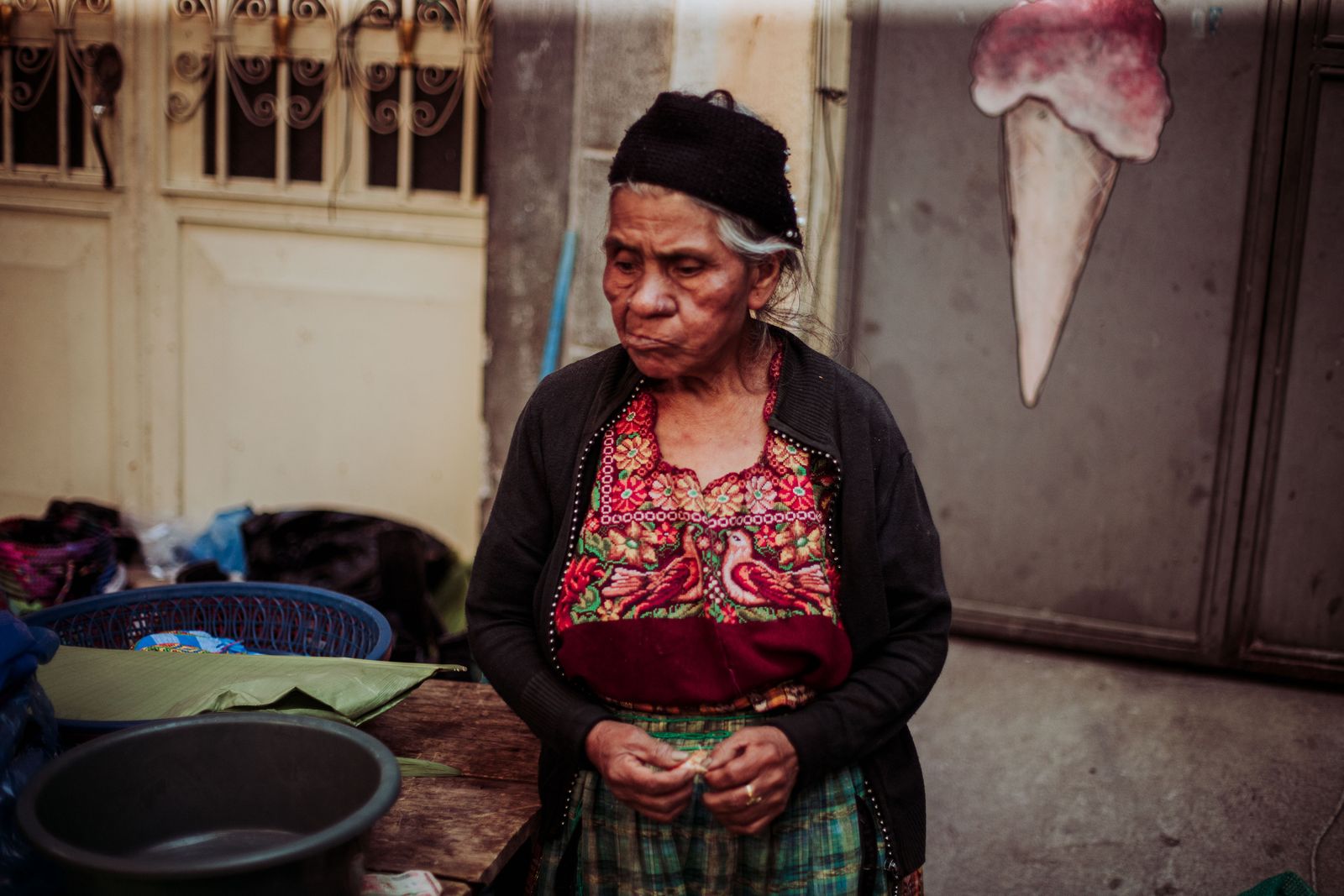
When we think of markets and fairs, the first thing that comes to mind are stalls filled with products and the hustle and bustle of trade. But if we look a little closer, these spaces are mirrors of much deeper stories: they reflect how societies are organized, how identities are built, and even how the world's most brilliant people adapt to challenges. Let's explore some surprising facts that show us another side of these "markets" of life, culture, and ideas.
Of Identities and Traditions: An Unexpected Journey
1. Mexico's "De-Indianization": A Silent Process
Imagine a country where, two centuries ago, the majority of the population identified as indigenous. Then, through a series of laws and policies, that identity began to intentionally fade. This is what anthropologist Guillermo Bonfil Batalla called the "de-Indianization" of Mexico, a cultural and institutional process, not merely biological, as Wikipedia explains.
From the colonial era to the 20th century, the state implemented measures like the imposition of Spanish, the dispossession of communal lands, and rural schools to "civilize" indigenous children. Today, only about 6.5% of Mexicans speak an indigenous language, a drastic change from 1821, when they were the majority.
2. Borges' Blindness: A New Lens for Art
Jorge Luis Borges, one of the most important writers in universal literature, began to lose his sight at age 55. Far from being an insurmountable obstacle, blindness became a creative catalyst. Researchers suggest that this condition led him to invent more innovative literary symbols, relying on his imagination, and to prefer poetry and short stories over novels, as detailed in his biography.
It's a fascinating example of how a personal challenge can transform an artist's "offering" in the market of ideas. His mind, freed from the need to see, explored labyrinths and dreams, creating works that are pillars of fantastic and philosophical literature.
3. Valledupar: The Cacique, The Kings, and Vallenato
Valledupar, known today as the "World Capital of Vallenato" in Colombia, has a name that is a true historical mosaic. Its full name, "City of the Holy Kings of Upar Valley," is a tribute to the Three Wise Men (due to its founding date) and, at the same time, to Cacique Upar, leader of the Chimila ethnic group. This is recounted by Wikipedia.
This place is a living example of how cultures intertwine. Every year, it attracts thousands to the Vallenato Legend Festival, a major cultural market where the region's identity is shared and revived. Place names often hold complex stories.
4. The Nobel Borges Never Received: Beyond Literature
Despite his genius and having been a candidate for almost thirty years, Jorge Luis Borges never won the Nobel Prize in Literature. Although he won other important international awards, such as the Formentor in 1961 (along with Samuel Beckett) and the Jerusalem Prize in 1971, his conservative political stances were a constant source of debate, and it is speculated that these may have influenced the Swedish Academy's decision, according to his Wikipedia profile.
This case shows us that the "market" of literary recognition is not always governed solely by the quality of the work. External factors, such as personal ideologies, can play a significant role in public valuation and major awards.
5. Valledupar: An Economic Hub Few Know
While vallenato is its most famous calling card, Valledupar is much more than music. This Colombian city is a fundamental center for agricultural, agro-industrial, and livestock production in its region. Furthermore, it has a strategic location: it lies between Cerrejón and the La Loma-La Jagua mining complex, two of the country's largest coal mining basins, according to Wikipedia.
This makes it a key player in Colombia's economic "market," beyond its vibrant cultural life. It's a good reminder that many cities have multiple facets, and their importance often extends to productive sectors that don't usually make headlines.
6. "Indio": A Colonial Label, Not an Identity
The word "indio," often used generically to refer to the indigenous peoples of America, has a much more complex and problematic origin than it seems. According to Guillermo Bonfil Batalla, and as explained in Wikipedia, it does not designate a cultural or biological identity, but an administrative category imposed by the colonial regime. Its purpose was to homogenize very different peoples under a common denominator of legal and social inferiority.
This revelation changes how we understand the construction of hierarchies in the colonial "social market." The label was a tool of domination that grouped diverse nations under the same umbrella to facilitate their control and the extraction of tributes.
7. "Re-Indianization": When Identity Becomes a Banner Again
Against the long process of "de-Indianization" experienced by Mexico, a powerful counter-movement has emerged in recent decades: "re-Indianization." Since the late 20th century, and with significant momentum after the Zapatista uprising in 1994, intellectuals and entire communities have begun to adopt the word "indigenous" as their own political banner. This is not just a name change, but a reaffirmation of their communal way of life, based on collective work and assemblies, as described in Wikipedia.
This resurgence of identity is an inspiring example of how communities can resist and, over time, redefine their place in the cultural and political "market." It's a process that shows history is not fully written and that identities can be transformed, reclaimed, and strengthened. If you're interested in how companies can respond to social movements, you can read this article.
8. Borges: A Man of Many Trades Before Fame
Before becoming the celebrated author of Ficciones and El Aleph, Jorge Luis Borges had a rather varied professional career. He worked as a librarian, an English literature professor at the University of Buenos Aires, a lecturer, a screenwriter, and a translator. This diversity of roles, which you can see in his biography, shows us a man who explored different "job markets" before consolidating his literary legacy.
His trajectory is a reminder that even great figures can have winding paths. It teaches us that experience in different fields can enrich perspective and creativity, a valuable idea for any entrepreneur looking to scale their venture.
9. The Founding of Valledupar: A Gift from the Kings
The story of how a city was founded often contains curious details. Valledupar, for example, was established by Captain Hernando de Santana on January 6, 1550. This date was not coincidental: it coincided with the Day of the Three Wise Men, a Christian holiday that explains why the city was baptized by the Capuchin friars as "City of the Holy Kings of Upar Valley." This is detailed in Wikipedia.
It's a beautiful example of how the traditions and beliefs of an era can seal the fate of a place. The choice of date not only marked the beginning of a city but also gave it a name full of symbolism, connecting its origin to an important celebration.
10. Mexico's Demographic Shift: The Impact of Policies
Mexico's demographic transformation, from a country with an indigenous majority in 1821 to a minority today, was not a natural process nor exclusively the result of biological mestizaje. It was the accumulated effect of laws, censuses, and assimilationist policies that, over centuries, led many people to stop identifying as indigenous. This is one of the central conclusions of the concept of de-Indianization, as explained in Wikipedia.
This fact invites us to reflect on how political and social decisions can profoundly reshape the "market" of identities and the composition of a nation. It shows that behind demographic figures are stories of pressures and adaptations, and in many cases, the loss of a significant part of a country's cultural diversity.
Why it matters
These curiosities remind us that markets and fairs are much more than commercial transactions. They are stages where history, culture, politics, and personal lives intersect. Understanding these layers helps us see the world with a richer perspective and appreciate the complexity of human interactions, whether in a music festival, in a writer's work, or in the evolution of a society. They are spaces where goods are exchanged, yes, but also ideas, identities, and the soul of communities.
Script for your video
Runs about 51 secMake short videos? This script sums up the story so you can read it off your teleprompter and record a Reel, a Short, or a TikTok.
Title for your video
Markets: Blind Borges, vallenato, and Mexico. Surprising
How to use it
- 1Pick the length — 1 or 2 minutes — and tap “Copy script.”
- 2Paste it into the teleprompter app on your phone, or read it off the screen.
- 3Record vertically and post it to Reels, Shorts, or TikTok.
It's free to use, and you can monetize your video. We only ask that you say where you read it: the script already ends with “The full story is on losupe.com.”
Sources
Topicsmarketsfairsculturehistorysocietycuriosities