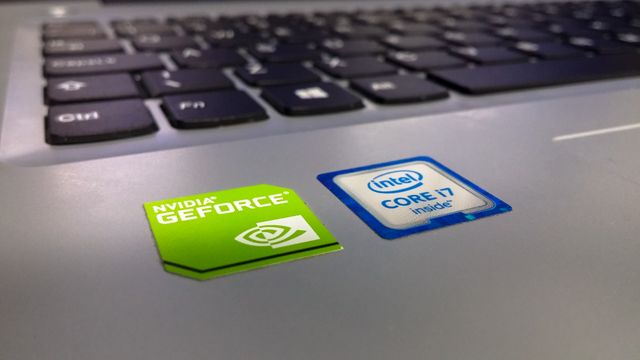
Micron, Nvidia, and AMD Lead Chip Stocks' Rebound After Multi-Trillion Dollar Losses
Semiconductor companies like Micron Technology, Nvidia, and AMD saw their stocks climb this Tuesday, recovering from significant declines. The sector had lost $3.7 trillion since early October, and the sustainability of this rally will depend on upcoming earnings reports from major tech firms.
ByAndreea Blidar5 min read

Shares of semiconductor companies, including Micron Technology, Nvidia, and AMD, experienced a notable rebound this Tuesday, signaling a potential recovery after weeks of steep declines. The PHLX Semiconductor Index (^SOX), which tracks the performance of leading chip firms, showed a significant increase. This movement comes after the sector as a whole shed a staggering $3.7 trillion in market value since October 6, according to calculations by Yahoo Finance.
Micron Technology (MU), a key player in the memory chip market, saw its shares jump by 2%, reversing some of the 7% decline it suffered on Monday. Other important memory and storage names, such as SK Hynix (SKHY), Sandisk (SNDK), Seagate (STX), and Western Digital (WDC), also opened higher. AI chipmakers Nvidia (NVDA) and AMD (AMD) led the advance, rallying 3% and 5% respectively. For AMD, this surge helped offset some of its 7% losses from the prior session, just ahead of the company's quarterly results. Broadcom (AVGO) edged up 3%, while Intel (INTC) jumped 1% after an 8% decline on Monday, as reported by Yahoo Finance.
A Sector Under Pressure: Recent Losses
Tuesday's rebound is particularly significant as it follows a period of intense pressure for tech stocks, especially semiconductors. Cumulative losses since October 6 amounted to $3.7 trillion. Nvidia recorded the largest dollar-value drop, while Intel suffered the steepest percentage devaluation among giants (nearly 50%), according to Yahoo Finance data. This situation reflected growing concerns over AI infrastructure spending and "neocloud" platform debt, which had curbed market enthusiasm in recent weeks.
The week leading up to October 19 was also challenging for the broader tech market. The S&P 500 fell nearly 2%, its worst weekly decline since late June, and the Nasdaq Composite dropped 4.5% over five days, as noted by CNBC. The iShares Semiconductor ETF (SOXX) was on pace to snap a nine-day slump. The iShares MSCI South Korea ETF (EWY), heavily reliant on SK Hynix and Samsung Electronics, also surged 4% after steep declines, underscoring the breadth of recovery in some areas of the sector.
The Crucial Role of AI and Market Expectations
For some time, semiconductor companies have been key beneficiaries of the artificial intelligence boom, as their chips are fundamental for the development and operation of AI systems. However, recent market behavior suggests increased caution. While we saw a rebound this Tuesday, some analysts view it as a "bounce from oversold conditions," meaning shares had fallen so much that an upward correction was expected. Katie Stockton, founder of Fairlead Strategies, highlighted this in a Monday note, reported by CNBC, stating that the S&P 500 and Nasdaq needed to "hold support" to prevent a further breakdown.
Most major tech companies have yet to release their quarterly reports and "have a high bar to clear," according to CNBC. While an impressive 85% of the 47 S&P 500 companies that already reported beat expectations, the overall index is on track for a blended earnings growth rate of 29%.
A More Discerning Market: End of Uniformity
The era where all AI stocks moved up or down in unison with headlines appears to be ending. Ron Albahary, chief investment officer at LNW, explained to CNBC that investors will now require "proof statements" from any company in the AI sector demonstrating they can deliver on the earnings growth expectations being built into their pricing. Albahary suggests we are not facing a "valuation-potential bubble" like the internet bubble, but rather an "earnings-expectation-potential bubble" in this cycle.
This means the market will adopt a "more discriminating" approach to technology. Instead of uniform movement, we will see "more of a dispersion of winners and losers" within the AI universe. Some companies with strong fundamentals may continue to thrive, while others, such as "neocloud" platforms that have accumulated significant debt, could face sell-offs. This outlook of a more selective market is a significant shift, as we previously discussed in this article about NIO's stock performance.
Sameer Samana, from Wells Fargo Investment Institute, described the situation as a "reality check" rather than a "full-blown unraveling," warning CNBC of more pressure in the days and weeks ahead. Wells Fargo had downgraded its tech sector rating due to "too optimistic" expectations, and while recent selling removed some optimism, they believe the adjustment could continue, even influenced by the "politicization of AI/data centers."
Why it matters
Tuesday's rebound in chip stocks offers investors a moment of relief, but any euphoria should be measured. The semiconductor sector, a fundamental pillar for the age of artificial intelligence, is navigating complex terrain. Recent losses and concerns about the long-term profitability of AI investments suggest that the market will no longer reward potential indiscriminately. Upcoming earnings reports from major tech companies will serve as the barometer, defining whether this rebound is the start of a solid recovery or merely a momentary pause on a path towards greater selectivity and adjustment of expectations.
Script for your video
Runs about 41 secMake short videos? This script sums up the story so you can read it off your teleprompter and record a Reel, a Short, or a TikTok.
Title for your video
Chip Stocks Rebound: Micron, Nvidia up after huge losses.
How to use it
- 1Pick the length — 1 or 2 minutes — and tap “Copy script.”
- 2Paste it into the teleprompter app on your phone, or read it off the screen.
- 3Record vertically and post it to Reels, Shorts, or TikTok.
It's free to use, and you can monetize your video. We only ask that you say where you read it: the script already ends with “The full story is on losupe.com.”
Sources
Topicssemiconductorsstockstechnologyartificial intelligenceMicronNvidiaAMDstock market