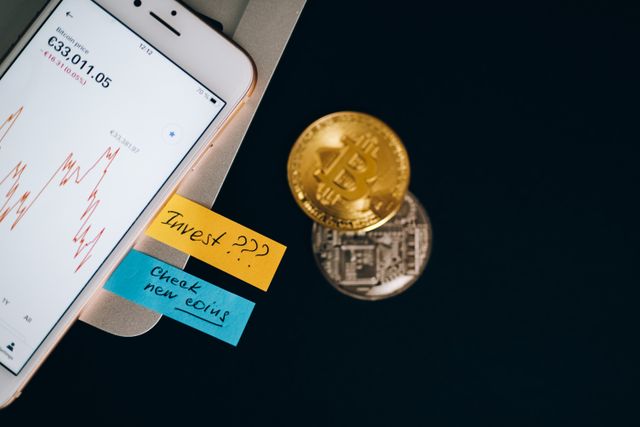
7 Key Signs to Spot Cryptocurrency Scams and Protect Your Money
The world of cryptocurrencies offers incredible opportunities, but it's also a fertile ground for scams. Learn to recognize the most common red flags to protect your investments and avoid falling into financial traps.
ByPedro Llerena5 min read

The cryptocurrency universe has changed the way we think about money and investments. With its growth, so has the number of malicious actors looking to take advantage of those excited to enter or simply lacking full information. It's not that cryptocurrencies are inherently dangerous, but like any new frontier, you need to know where to tread carefully. That's why understanding how scams work is your best defense.
This is a constantly moving sector, as we've seen with Bitcoin rebounding to $94,000, an example of volatility and potential gains (as we reported here). However, that same effervescence attracts scammers. Here are seven important signs so you can protect your money and your peace of mind.
1. Promises of Guaranteed Returns and Unrealistic Profits
One of the biggest red flags is any promise of "guaranteed profits" or "astronomical returns" in a very short time with no risk. If something sounds too good to be true, it almost certainly is. The crypto market is inherently volatile, and high returns always come with significant risk. No one can guarantee profits in a market that changes so quickly.
Scammers will often show you impressive charts or fake testimonials to convince you that their "opportunity" is unique and foolproof. They'll tell you that you'll multiply your money in days or weeks, which doesn't happen in legitimate investments without enormous risk. If you feel pressured by this, it's best to take a step back and seek more information from reliable sources.
2. Pressure to Act Quickly and Artificial Urgency
Scammers often create an urgent environment to make you make impulsive decisions, without giving you time to research or consult with a trusted person. Phrases like "limited-time offer," "only a few spots left," or "you have to invest now or you'll miss the opportunity of a lifetime" are common tactics. They want to prevent you from thinking clearly.
A legitimate investment won't force you to decide in minutes. You will always have the ability to research, compare, and fully understand where you are putting your money. If you feel rushed, it's a clear sign that something is wrong, and you should be careful.
3. Unsolicited Contact, Especially on Social Media
Be wary if you receive unexpected direct messages on social media (like Telegram, Instagram, X, or LinkedIn) or emails from strangers offering cryptocurrency investment opportunities. Many frauds start this way: with a stranger who acts very friendly and invites you to join an exclusive group or a "secret" platform.
Romance scams, for example, are common in the crypto space. Someone gains your trust, develops a relationship, and then asks for money for a "secure" investment that only exists in their head. Distrust unsolicited contacts and never send money to people you only know online, no matter how convincing they seem.
4. Lack of Transparency About the Project or Team
Legitimate cryptocurrency projects are usually very transparent. They have a clear "whitepaper" that explains their technology, purpose, and roadmap. Additionally, the team behind the project is usually visible, with verifiable professional profiles. If a project does not have a whitepaper, or it is vague and full of meaningless jargon, it is a bad sign.
If the team is anonymous and there is no information about who leads it, or if their profiles seem fabricated, an alarm should sound. Transparency is fundamental in the crypto world to build trust. A good example of the importance of information is the mystery surrounding Bitcoin's creator (read about it here), but even in that case, the protocol is open source and verifiable.
5. Request for Your Private Key or Recovery Phrase
Never, under any circumstances, share your private key, seed phrase, or password with anyone. These are the keys to your digital wallet and your funds. No legitimate platform, technical support, or exchange service will ask for this information. If someone does, it's a scammer.
Scammers often impersonate technical support or group administrators to ask for these keys, saying they need to "fix a problem" or "verify your account." Remember: your private key is like your debit card PIN, but much more important. It is the only thing that protects your cryptocurrencies.
6. Websites or Applications with Errors or Strange Domains
Pay close attention to the URL of cryptocurrency websites and the quality of the applications you download. Scammers create fake websites and applications that look very similar to legitimate ones, but with small differences in the domain (e.g., "exchange.com" instead of "exhange.com") or spelling and design errors.
Always verify that the URL is correct and look for a padlock symbol in the address bar, which indicates a secure connection (HTTPS). Download applications only from official stores (Google Play Store, Apple App Store) and verify the developer. If you see obvious grammatical or design errors, be suspicious.
7. Unsustainable Investment Models: Ponzi and "Pump and Dump"
Some scams masquerade as sophisticated investment opportunities but are actually Ponzi or "Pump and Dump" schemes.
- Ponzi Schemes: promise high returns by paying older investors with money from new investors. These schemes collapse when not enough new participants enter, leaving most with nothing.
- "Pump and Dump": involves artificially inflating the price of a low-cap cryptocurrency through deceptive advertising (the "pump") and then quickly selling one's own holdings (the "dump"), leaving other investors with worthless assets.
Always thoroughly research the business model. If you don't understand how returns are generated or if it relies exclusively on attracting more and more people, it's a red flag.
Why it matters
The cryptocurrency market remains a space with great potential, but also a magnet for cybercriminals. Education and caution are your best tools. By knowing these signs, you can make more informed decisions, protect your digital assets, and enjoy the true opportunities this innovative sector has to offer.
Script for your video
Runs about 48 secMake short videos? This script sums up the story so you can read it off your teleprompter and record a Reel, a Short, or a TikTok.
Title for your video
Crypto Scams: 7 Red Flags to Protect Your Money! Alert!
How to use it
- 1Pick the length — 1 or 2 minutes — and tap “Copy script.”
- 2Paste it into the teleprompter app on your phone, or read it off the screen.
- 3Record vertically and post it to Reels, Shorts, or TikTok.
It's free to use, and you can monetize your video. We only ask that you say where you read it: the script already ends with “The full story is on losupe.com.”
Sources
Topicscryptocurrencyscamssecurityinvestmentfraudprevention