Economic Sanctions and the Strait of Hormuz: A Guide to Their Global Impact
The recent U.S. financial offensive against Iran and threats in the Strait of Hormuz highlight the complexity of economic sanctions. This guide explores how they work, their impact on economies, and the importance of key points like Hormuz for global trade.
ByAndreea Blidar7 min read
The news that the United States is preparing a significant new financial offensive against Iran, coupled with Tehran's threats to seize vessels in the strategic Strait of Hormuz, has once again brought economic sanctions and their profound global impact into sharp focus. According to U.S. Treasury Secretary Scott Bessent, as quoted by CNBC, these measures aim to intensify pressure on the Iranian economy, which the Trump administration has described as in "freefall" with "runaway inflation and a collapsing currency." For its part, Iran has responded defiantly, with Foreign Minister Abbas Araghchi calling the threats "desperate" and dismissing their effectiveness, while the state-controlled Persian Gulf Strait Authority (PGSA) warned of potential seizures of vessels violating its transit rules, as reported by CNBC.
This situation prompts us to better understand a crucial topic in global geopolitics and economics: economic sanctions. Beyond the immediate news, comprehending how they work, what effects they have, and how they impact vital regions like the Strait of Hormuz, is key for anyone interested in international trade and finance. Here’s a guide to unraveling this complex landscape.
What Are Economic Sanctions and Why Are They Used?
Economic sanctions are tools that governments or blocs of countries use to pressure other nations, entities, or individuals, with the goal of changing their policies or behaviors without resorting to direct military force. They are a form of economic warfare, designed to financially isolate and limit access to key resources.
In Iran's case, the new U.S. measures add to an extensive sanctions regime already affecting vital sectors. As CNBC details, these include restrictions in the banking, energy, aviation, and cryptocurrency sectors. This means that companies and banks in other countries are prohibited or find it difficult to conduct transactions with Iranian entities in these areas.
There are primarily two types of sanctions:
- Primary sanctions: These are applied directly to the entities or individuals within the target country.
- Secondary sanctions: These are broader and target third-party countries or companies that do business with the sanctioned country. Secretary Bessent has warned that "any nation that serves as a financial artery of a withering regime should expect to share in its isolation," a clear message to foreign governments still transacting with Tehran, according to CNBC. This creates a ripple effect, forcing global businesses to choose between operating in the sanctioning market or the sanctioned one.
The Impact of Sanctions on an Economy
When a country is subject to economic sanctions, the effects can be profound and far-reaching. The objectives are often to disrupt its ability to finance activities deemed undesirable by the sanctioning country, and to generate internal pressure for political change.
Among the most common impacts are:
- Inflation and currency devaluation: By limiting trade and investment, the supply of goods and services can decrease, while the local currency loses value against foreign currencies. The Trump administration has claimed that Iran's economy is in "freefall" with "runaway inflation and a collapsing currency," as reported by CNBC.
- Difficulty accessing international markets: Companies in the sanctioned country struggle to buy or sell goods abroad, affecting exports (like oil) and essential imports.
- Financial isolation: International banks avoid transactions with sanctioned country entities to prevent legal or financial risks, making it difficult to access credit and the global banking system.
- Impact on key sectors: Specific sanctions, such as those targeting aviation or energy, can cripple entire industries, affecting transport, production, and employment.
However, the effectiveness of sanctions is a matter of debate. Iran, for example, has dismissed the threats of new sanctions as a "desperate" ploy, asserting that U.S. actions are set to fail, according to CNBC. This underscores the complexity of predicting the ultimate outcome of these measures.
The Strait of Hormuz: A Critical Global Chokepoint
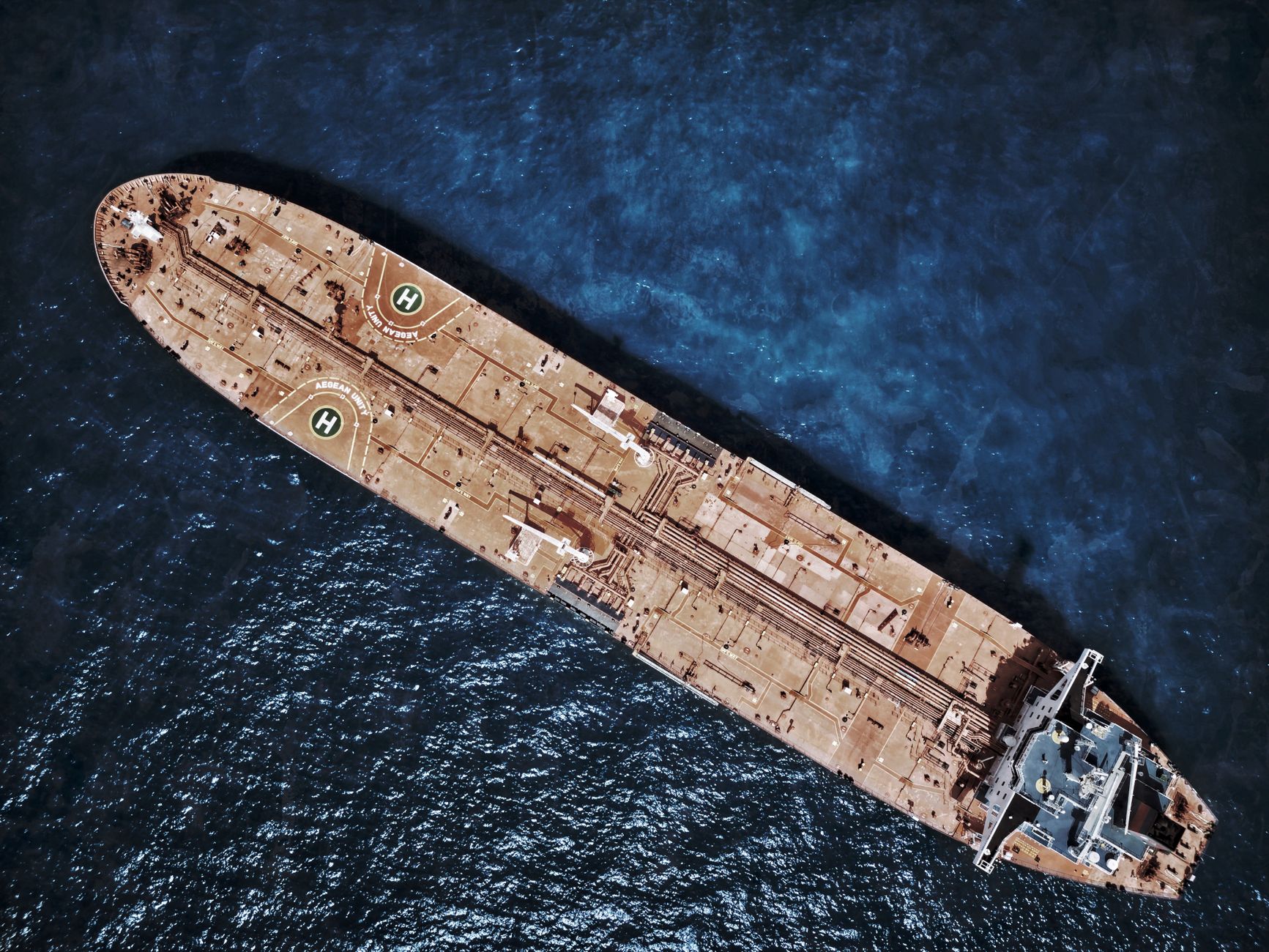
Beyond finance, tensions with Iran invariably highlight the importance of the Strait of Hormuz. This narrow maritime passage, connecting the Persian Gulf to the Arabian Sea and the Indian Ocean, is one of the world's most vital "chokepoints" for oil transport. CNBC notes that, before the current conflict, approximately one-fifth of the world's seaborne oil passed through this strait.
The relevance of the Strait of Hormuz lies in its being the only sea outlet for several major oil producers, including Saudi Arabia, Kuwait, Iraq, Iran, and the United Arab Emirates. Any disruption in this passage has the potential to destabilize global energy markets, even if crude prices, such as West Texas Intermediate and Brent, pulled back slightly in Asian trading despite the looming escalation, according to CNBC.
Iran's threats to seize vessels violating transit rules in Hormuz, or warnings from the UK Maritime Trade Operations agency about a "continued risk of drifting or uncharted mines," as also reported by CNBC, are constant reminders of the fragility of global energy supply chains and how geopolitics can directly affect the world economy.
Navigating the International Trade Landscape Under Sanctions
For businesses and nations operating in international trade, the sanctions environment presents significant challenges. It's crucial to understand how these measures can affect operations and long-term strategy.
Some key considerations include:
- Thorough due diligence: Before conducting any international transaction, it is essential to check sanctions lists and ensure that you are not operating with restricted entities or individuals.
- Risk management: Secondary sanctions mean that even if a company has no direct relationship with a sanctioned country, it can be affected if its business partners do. Mohsen Rezaei, secretary of Iran's Supreme National Security Council, warned that "any country that becomes a partner in creating economic restrictions against us will be regarded by us as an enemy," as reported by CNBC, illustrating the diplomatic and economic implications.
- Supply chain diversification: Reliance on a single region or supplier can be risky in a world where geopolitical tensions can escalate rapidly.
- Legal and compliance advice: Given the complexity of sanctions regulations, seeking expert advice is vital to ensure compliance and avoid severe penalties.
Economic resilience becomes even more important in this context, as we discussed in this note, as nations must adapt to changing trade environments and external pressures.
Key Indicators for Monitoring the Iranian Economy (and Others Under Pressure)
While detailed information on economies under sanctions can be limited, certain key indicators can offer an overview of their health and the effectiveness of external pressures:
- Inflation rates and currency value: Uncontrolled price increases and a sharp currency devaluation are clear signs of economic stress, such as the "runaway inflation and a collapsing currency" that the Trump administration attributes to Iran, according to CNBC.
- Export and import volumes: Especially for key products like oil or essential goods, as sanctions aim to limit these flows.
- Foreign exchange reserves: A decrease in foreign exchange reserves can indicate difficulties in financing imports or stabilizing the currency.
- GDP growth: Although it can be difficult to measure accurately in sanctioned economies, a slowdown or contraction in GDP is a general indicator of weakness.
- Foreign direct investment: A lack of foreign investment is a direct result of sanctions and limits economic development.
Why it matters
Economic sanctions and geopolitical tensions, such as those surrounding Iran and the Strait of Hormuz, have repercussions that extend far beyond the borders of the directly involved countries. They affect energy prices, global supply chains, and international financial stability, influencing the cost of living and business opportunities worldwide. Understanding these mechanisms allows us to be more informed citizens and economic actors, capable of anticipating and adapting to a constantly changing global landscape.
Script for your video
Runs about 1 min 54 secMake short videos? This script sums up the story so you can read it off your teleprompter and record a Reel, a Short, or a TikTok.
How to use it
- 1Pick the length — 1 or 2 minutes — and tap “Copy script.”
- 2Paste it into the teleprompter app on your phone, or read it off the screen.
- 3Record vertically and post it to Reels, Shorts, or TikTok.
It's free to use, and you can monetize your video. We only ask that you say where you read it: the script already ends with “The full story is on losupe.com.”
Sources
Topicseconomic sanctionsIranStrait of Hormuzglobal tradegeopoliticseconomy