10 Unexpected Secrets of Markets and Fairs That Will Change How You See Them
Markets and fairs are much more than just points of buying and selling. They are windows into deep stories, cultural evolution, and human resilience. We invite you to discover ten curiosities that will make you look at these spaces with new eyes.
ByMerry Melina7 min read
From vibrant music festivals to complex processes of cultural identity, markets and fairs are mirrors of our societies. They are not just places for exchanging goods, but also for sharing ideas, forging identities, and celebrating traditions. Sometimes, the most fascinating stories are hidden behind what seems like a simple transaction or a festive event.
We invite you on a journey through ten secrets and curiosities that will make you see these meeting places from a completely new perspective, revealing how history, politics, and creativity intertwine in their corners.
The World Capital of Vallenato Was Born on Kings' Day
Valledupar, a city in the Colombian Caribbean, has a very particular founding story. It was on January 6, 1550, when the Spanish conquistador Hernando de Santana established it. This date, which coincides with Epiphany (Three Kings' Day), inspired the Capuchin friars to name it “City of the Holy Kings of Upar Valley”.
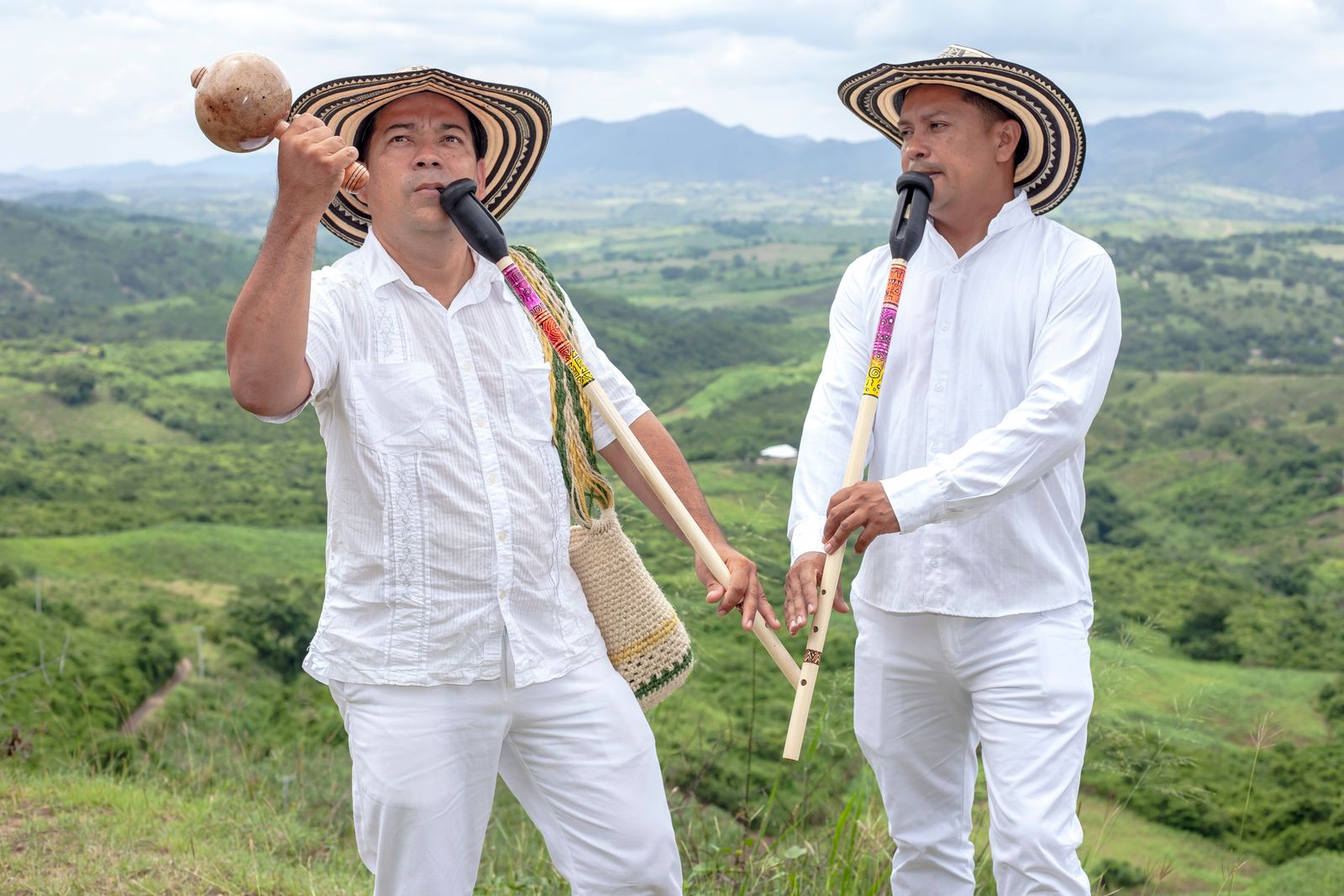
The most curious part is how this religious and colonial origin led the city to become “The World Capital of Vallenato.” Every year, Valledupar attracts thousands of national and international visitors with its famous Vallenato Legend Festival, an event that celebrates this iconic Colombian musical genre, declared a Cultural Heritage of the Nation, as you can read on Wikipedia. It’s a testament to how a place can evolve from a colonial settlement into a vibrant global cultural market.
A Colonial Label Became a Political Banner
In Mexico, the word “indio” (Indian) has a complex and painful history. Anthropologist Guillermo Bonfil Batalla coined the concept of “desindianización” (de-Indianization) to describe how the colonial regime used this term not as a cultural identity, but as an administrative category to classify and subjugate diverse indigenous peoples under a status of legal and social inferiority. It was a way to homogenize them for easier control.
However, what’s surprising is that, centuries later, this term has been re-signified. Starting in the late 20th century, and especially after the Zapatista uprising in 1994, the “reindianización” (re-Indianization) movement has embraced the word “indígena” (indigenous) as a political banner of pride and resistance. What was once an imposition is now an affirmation of identity, as explained on Wikipedia, transforming a market of control into a market of self-determination.
Jorge Luis Borges's Elusive Nobel Prize
Jorge Luis Borges, one of the most influential writers in universal literature, was a candidate for the Nobel Prize in Literature for nearly thirty years. Despite his undeniable genius and having renewed the language of fiction, he never received the award, a fact that continues to generate debate.
Many researchers and critics have suggested that his conservative political stances may have influenced the Swedish Academy’s decision. In the “market” of literary reputation, pure talent is sometimes not the only factor. Borges’s story reminds us that public recognition can be subject to considerations beyond artistic merit, as detailed in his Wikipedia biography.
Valledupar's Name: Between a Chief and the Three Kings
Valledupar’s name is a fascinating reflection of the mix of cultures that shaped it. The first part, “Valle” (Valley), refers to the Cesar River valley where the city is located. The second, “Upar,” is a tribute to the Chimila chief who governed the region when the Spanish arrived.
But the original full name, “City of the Holy Kings of Upar Valley,” is even more evocative. It was an addition by the Capuchin friars, who wanted to honor the Three Kings, as the city’s founding coincided with January 6, their feast day. This unique appellation tells us about a “market” of influences, where geography, indigenous history, and religious imposition merged into a single toponym, according to Wikipedia.
The Blindness That Opened New Worlds for Borges
At 55, Jorge Luis Borges began to lose his sight, eventually becoming almost blind. For many, this would be a paralyzing tragedy, but for the Argentine writer, it became a kind of creative catalyst. Far from stopping him, his progressive blindness motivated him to explore new forms of expression.
Numerous scholars suggest that this condition pushed him to create even more innovative literary symbols and to prefer poetry and short stories, where imagination and language could compensate for the lack of sight. His mind became an inexhaustible “market” of ideas, demonstrating how a limitation can open unexpected paths for creativity, as mentioned on his Wikipedia page.
“Desindianización”: A Planned Historical Process
“Desindianización” in Mexico was not a spontaneous phenomenon or a simple biological “mestizaje” (mixing). It was a deliberate historical-cultural process, designed to force indigenous nations to renounce their identity. This process unfolded over centuries through a series of successive laws, institutions, and cultural policies.
From the imposition of Spanish and the collection of tributes during the Viceroyalty, to the 20th-century rural schools intended to “civilize” indigenous children and censuses that only counted them by the language they spoke at home, everything contributed to pushing communities to stop identifying as indigenous. It is a stark example of how the “market” of identity can be manipulated by power, as detailed on Wikipedia.
Valledupar: An Agricultural Market Amidst Towering Mountains
Although Valledupar is known for its festival and music, it is also a vital economic center for the region. It is located north of the Cesar Valley, nestled between the imposing structures of the Sierra Nevada de Santa Marta and the Serranía del Perijá, with peaks reaching 1430 meters above sea level.
Despite this mountainous landscape, the city is an important center for agricultural, agro-industrial, and livestock production in the Colombian Caribbean. It is an example of how geography, though challenging, does not prevent the development of a prosperous “market” for primary goods, connecting the plains with the mountains, according to Wikipedia.
The “Indio” as a Colonial Administrative Tool
Anthropologist Guillermo Bonfil Batalla taught us that the concept of “indio” in America was not a natural cultural or biological category. It was an invention of the colonial regime, an administrative category imposed on very diverse peoples.
The objective was simple: to homogenize them under a common denominator of legal and social inferiority. This facilitated the collection of tributes, the imposition of language, and the organization of communities. That is, the “indio” was a label created for colonial management, an instrument in the “market” of power to classify and control populations, as detailed on Wikipedia.
Borges's Double Heritage: Military and Literary Figures
Jorge Luis Borges was not only a master of words but also a man aware of his roots. He himself considered having inherited two very distinct traditions from his ancestors: a military one and a literary one. His family tree connected him to illustrious Argentine families of Creole and Anglo-Saxon lineage, as well as Spanish and Portuguese.
Among his ancestors were colonels who fought in wars of independence and romantic poets who edited newspapers. This blend of warriors and thinkers, of action and contemplation, seems to have nourished his imagination, creating an internal “market” of influences that made him unique, according to his Wikipedia biography.
The “Repúblicas de Indios”: A Colonial Governance Market
During the Viceroyalty of New Spain, the colonial regime implemented a peculiar system of social organization known as the “repúblicas de indios” (republics of Indians). These were towns and neighborhoods with their own government, though always under colonial tutelage. The idea was to maintain some order and control over indigenous communities, allowing them limited autonomy.
However, this “two republics” model (one for Spaniards and one for Indians) did not last forever. The Bourbon reforms of the 18th century gradually dismantled this system, anticipating assimilationist policies that sought to integrate everyone under the same structure. It was a type of political-administrative “market” that reflected the tensions and changes in the way of governing during the colonial period, as explained on Wikipedia.
Why it matters
These curiosities show us that markets and fairs are much more than simple spaces for exchange. They are stages where history, culture, and identity are negotiated, celebrated, and sometimes, redefined. Each of these facts invites us to look more deeply at the places and concepts around us, understanding that behind every name, every celebration, or every label, there is a universe of human stories waiting to be discovered.
Script for your video
Runs about 51 secMake short videos? This script sums up the story so you can read it off your teleprompter and record a Reel, a Short, or a TikTok.
Title for your video
Markets & Fairs: Hidden Secrets That Will Change Your View!
How to use it
- 1Pick the length — 1 or 2 minutes — and tap “Copy script.”
- 2Paste it into the teleprompter app on your phone, or read it off the screen.
- 3Record vertically and post it to Reels, Shorts, or TikTok.
It's free to use, and you can monetize your video. We only ask that you say where you read it: the script already ends with “The full story is on losupe.com.”
Sources
Topicsmarketsfairsculturehistorycuriositiessales