“We set fear aside”: a Venezuelan entrepreneur launches Mercatren, an online store with 1.3 million products and delivery across the U.S.
A Venezuelan entrepreneur based in the United States is launching an online store with 1.3 million products, delivery to all 50 states, and a model built for the diaspora: pay here, receive there. The company cites an investment of more than $7.3 million and plans a step-by-step expansion to Colombia and Chile.
ByMerry Melina5 min read
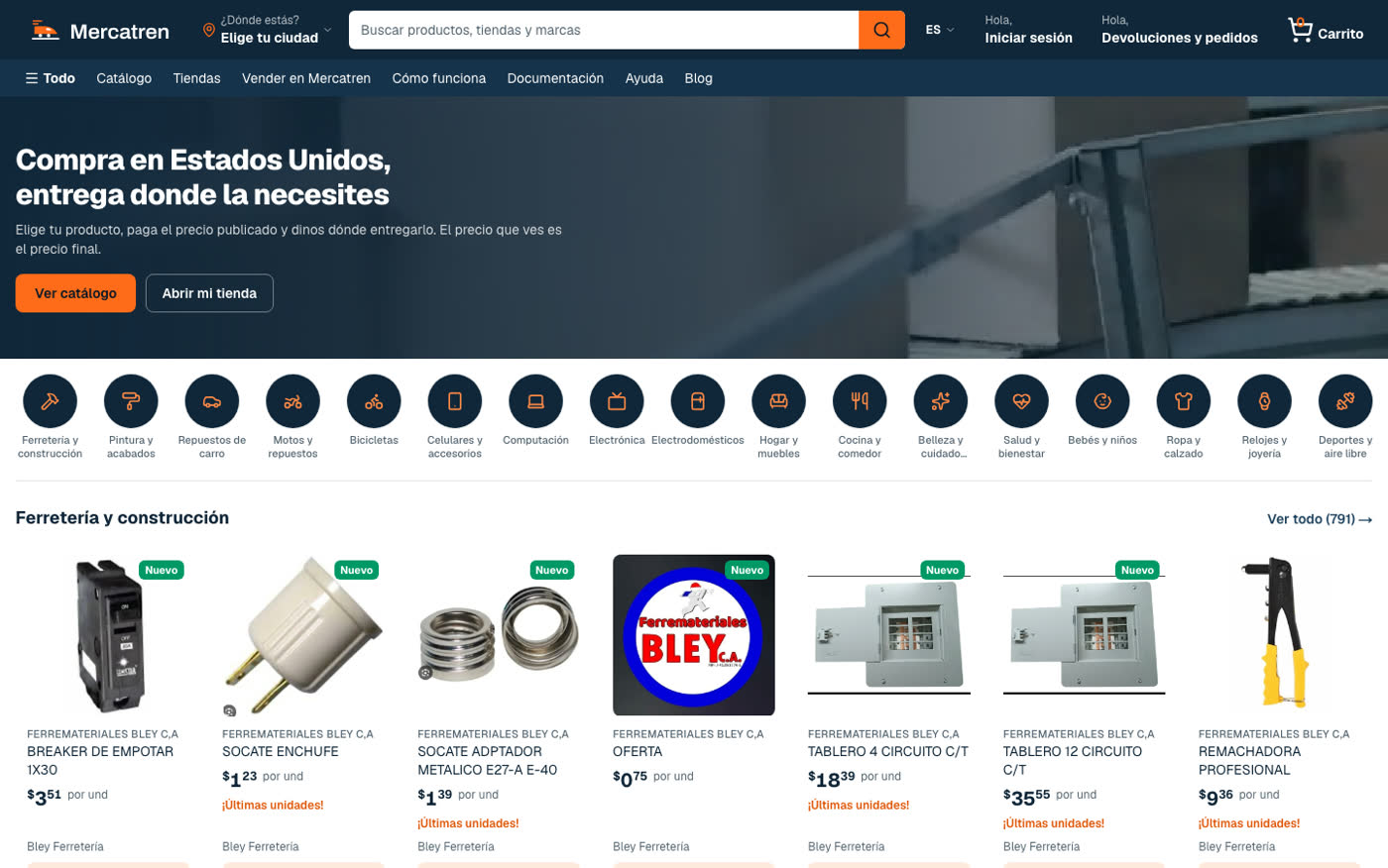
Online retail in the United States has well-known names and decades of head start, which is why few people dare to launch a general-catalog store. Every so often, though, a project shows up with an idea of its own. Mercatren is one of them: an online store founded by Pedro Llerena, a Venezuelan entrepreneur based in the U.S., that, according to the company's own figures, already lists 1.3 million products, delivers to all 50 states, and launches with an unusual twist: it lets someone pay from the United States and have the goods delivered in Venezuela.
“For a long time nobody dared to launch a store like this. We set fear aside and did it step by step,” Llerena told losupe. The company says the project starts with an investment of more than $7.3 million and that mercatren.com.co in Colombia and mercatren.cl in Chile will open in the coming months.
What Mercatren is and how it works
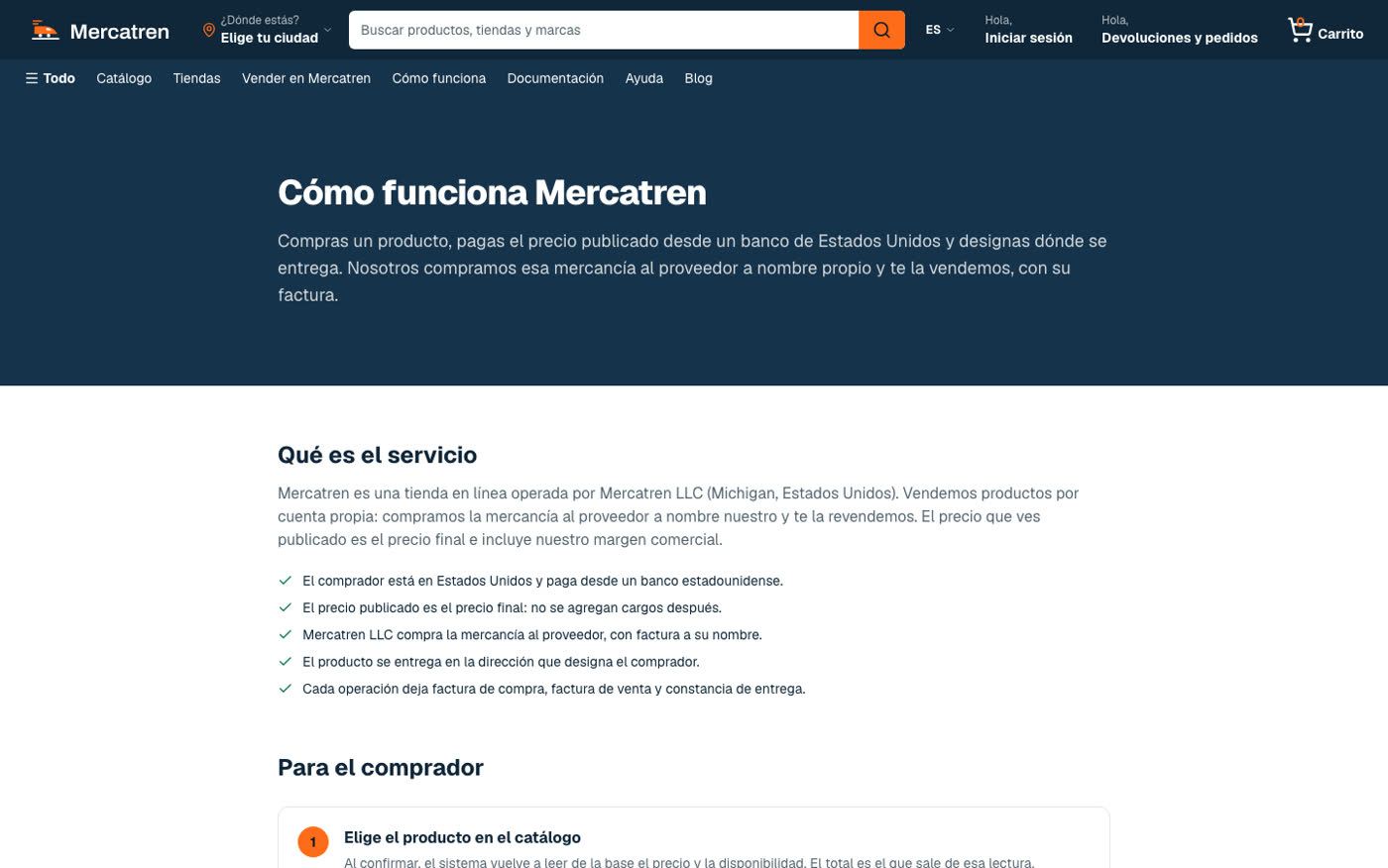
The promise fits in the line the company repeats on its homepage: “Buy in the United States, delivered wherever you need it.” The mechanics, laid out in its own documentation, are straightforward: the customer picks a product from the catalog, pays the published price from a U.S. bank (card, Zelle, or bank transfer for purchases of $200 or more), enters a delivery address, and receives an invoice and order tracking.
Behind that simplicity is a design choice: Mercatren LLC — registered in Michigan — buys the merchandise in its own name and resells it to the buyer, issuing an invoice at every step. There is no currency exchange (everything is bought and sold in dollars), no third-party funds are held, and the published price is the final price, with no charges added later. Every transaction keeps its documents for five years, and orders go through manual verification before approval. The company sums up its margin in one line: 3 percent, built into the price, with no monthly fee and no cost to list products.
The numbers behind the launch
- 1.3 million products in the catalog across 23 categories: hardware and auto parts, apparel, electronics, home, beauty, pets, and farm supplies, among others (company figure).
- Delivery to all 50 states through its U.S.-based storefronts, according to the company.
- More than $7.3 million invested, according to its founder.
- A 3 percent commission for merchants selling through the platform, with no other charges.
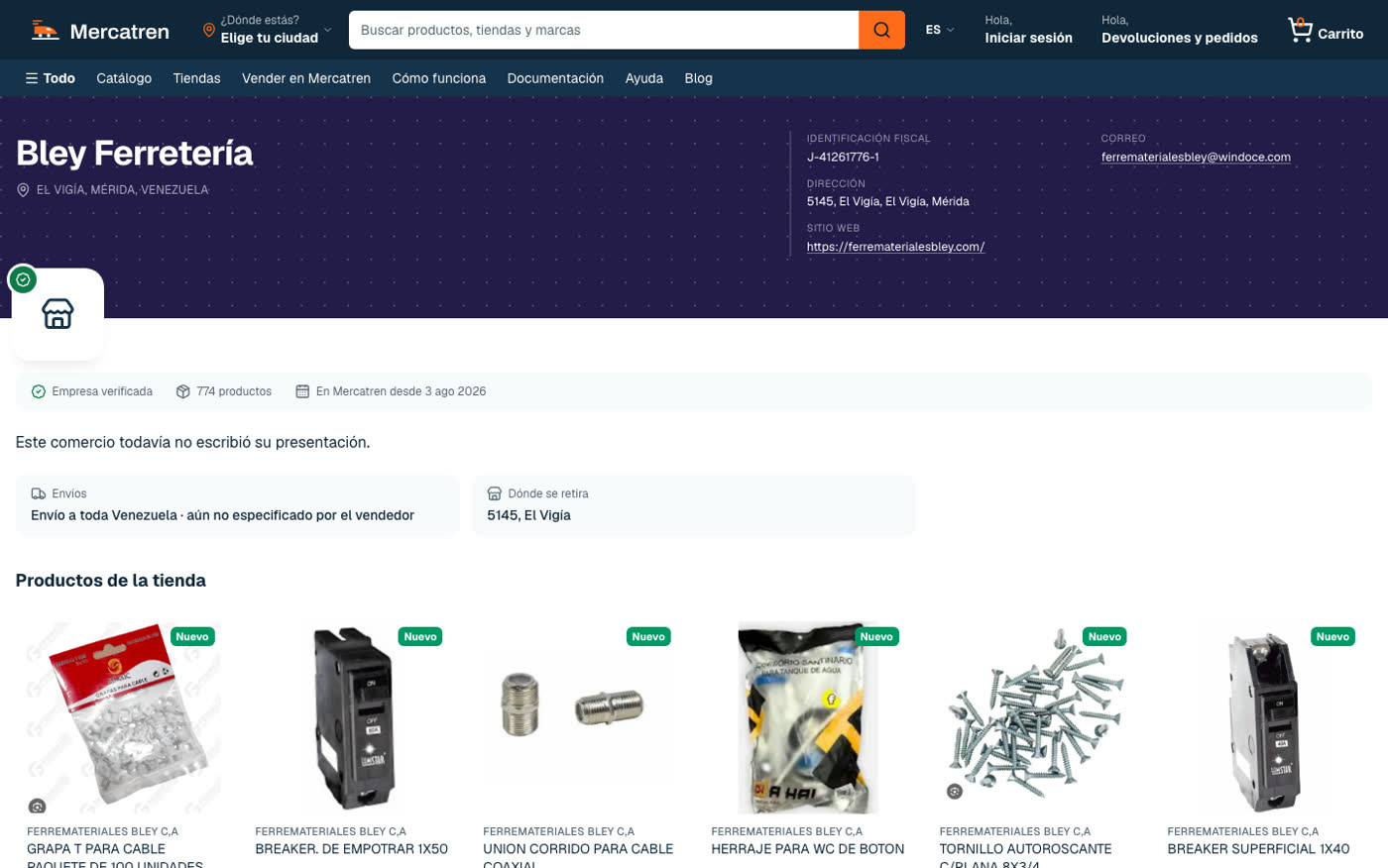
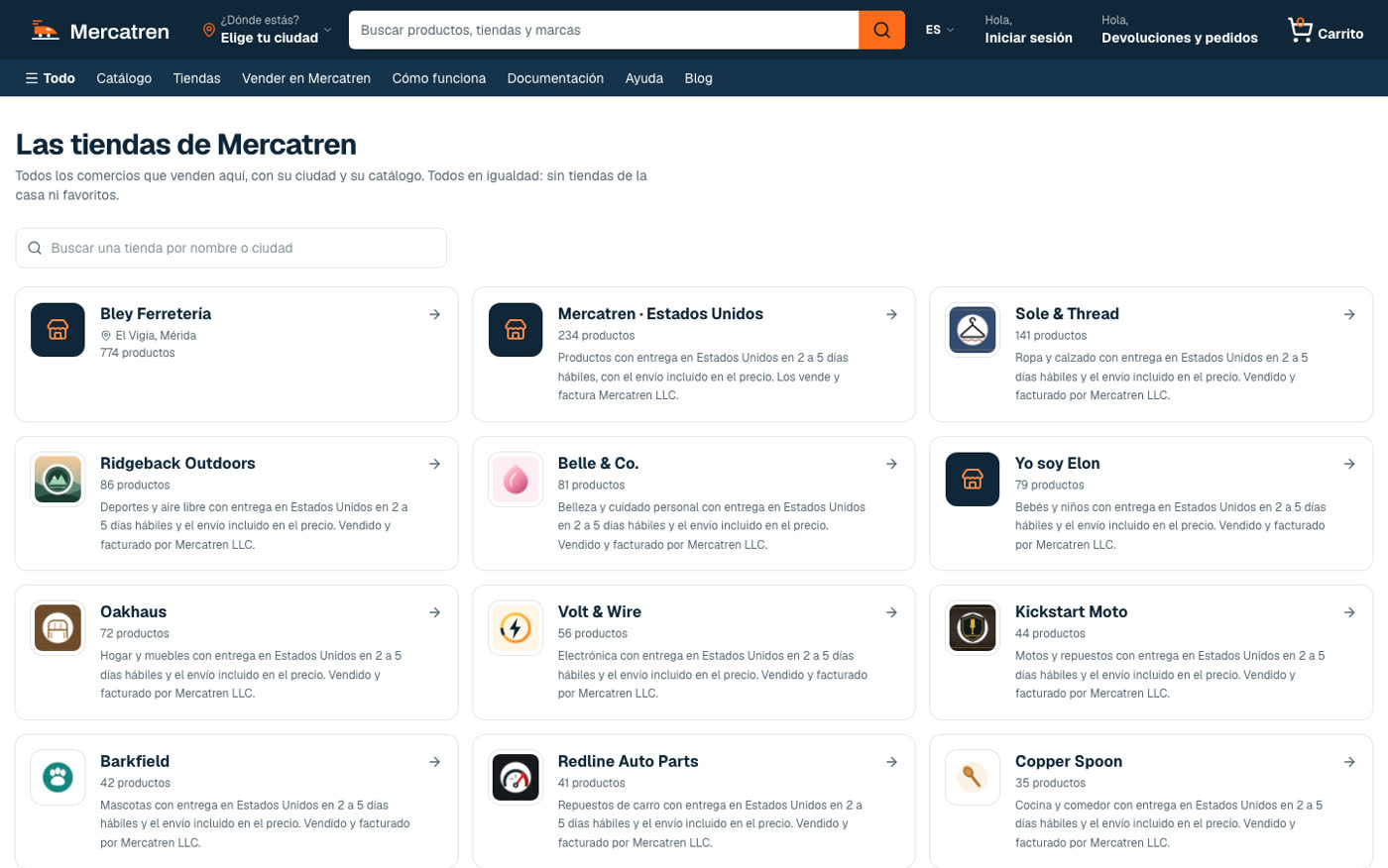
- About two dozen stores already visible on the site, including Venezuelan businesses such as Bley Ferretería, plus upcoming domains in Colombia and Chile.
The Venezuela bet: pay here, deliver there
The heart of the idea is not only selling American products. Mercatren lets registered businesses outside the United States — the company explicitly names Venezuela — open a storefront on the platform. The customer, a relative or friend in the U.S., pays for the order from a U.S. bank; Mercatren buys the goods from the store, pays the store against its invoice into a U.S. bank account, and the business delivers locally, by motorcycle or ground transport.
“We are the first startup giving stores in Venezuela the chance to open a shop where people can pay from here; we buy the products from them and they deliver there,” Llerena said. For many families in the diaspora it works, in practice, like a remittance in kind: instead of wiring money, you pay directly for the refrigerator, the medicine, or the construction materials — with an invoice and proof of delivery.
A call to merchants
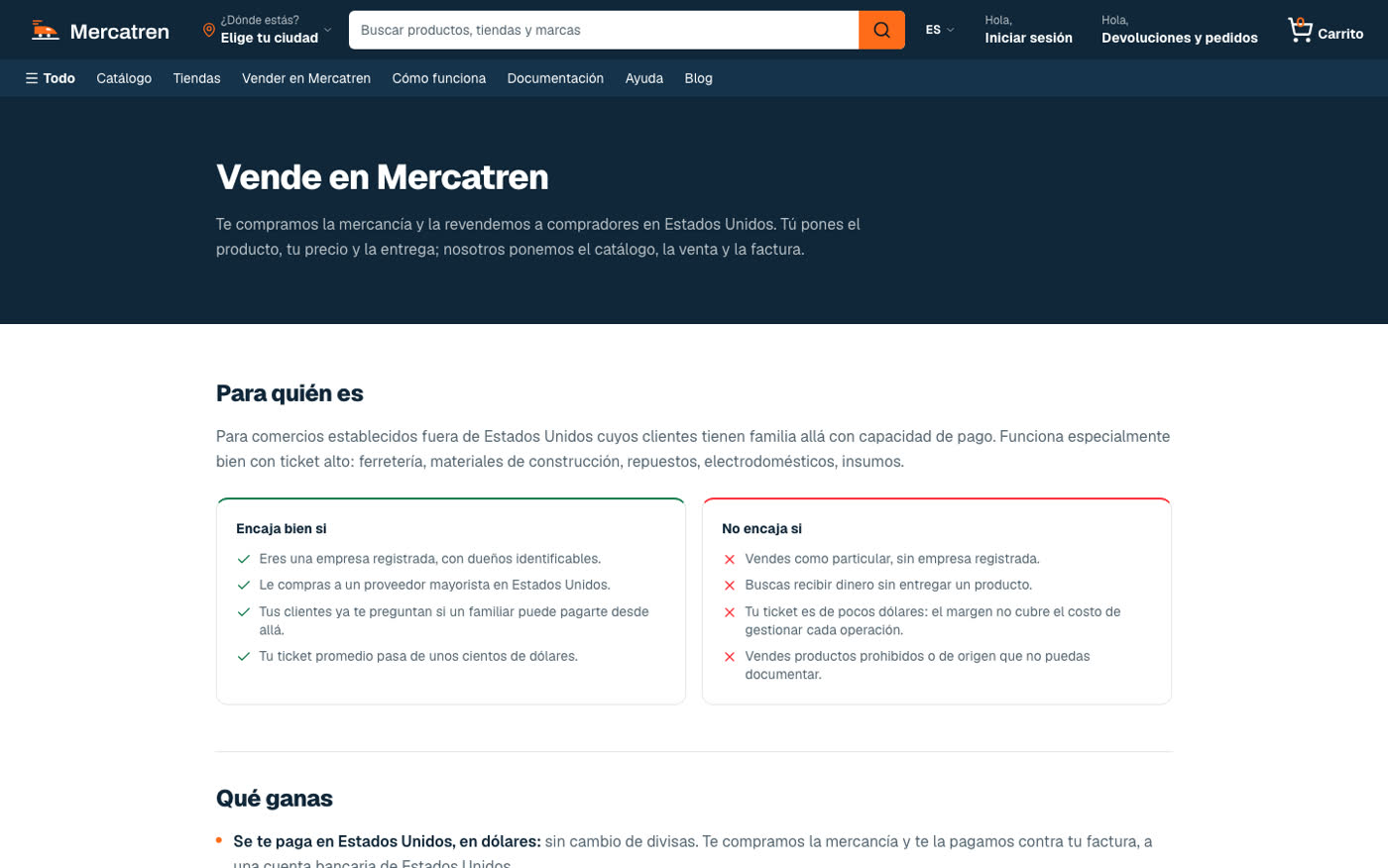
The founder used the launch to call on merchants in the United States who sell products into Venezuela to open their own store on Mercatren. The requirements the company publishes are clear: be a registered business with identifiable owners, sell legal products with documented origin, and serve customers who want to pay from the U.S. The platform is in a pilot phase and onboards a few merchants at a time; first contact is by email (hola@mercatren.com) or through the Sell on Mercatren section.
What's next: Colombia and Chile
The homepage already invites visitors to “choose your city,” and the company confirms that mercatren.com.co and mercatren.cl are coming “very soon.” The logic is the same: local businesses that get paid in dollars from the United States and deliver in their own country, with Mercatren as the buyer and invoice issuer in the middle.
Why it matters
Beyond the size of the catalog, the launch says something about this moment for Latino entrepreneurship in the United States: a project entering a big market with a product built for its own community and its feet on the ground — an invoice at every step, a final price with no surprises, and growth in stages. Whether the model takes off will depend on the usual things: service, delivery, and trust. But the first step has been taken. As its founder puts it: fear was set aside.
Script for your video
Runs about 45 secMake short videos? This script sums up the story so you can read it off your teleprompter and record a Reel, a Short, or a TikTok.
Title for your video
Mercatren: 1.3M products in the US, with deliveries to
How to use it
- 1Pick the length — 1 or 2 minutes — and tap “Copy script.”
- 2Paste it into the teleprompter app on your phone, or read it off the screen.
- 3Record vertically and post it to Reels, Shorts, or TikTok.
It's free to use, and you can monetize your video. We only ask that you say where you read it: the script already ends with “The full story is on losupe.com.”
Sources
TopicsMercatrenentrepreneurshipe-commerceVenezuelaUnited Statesdiaspora