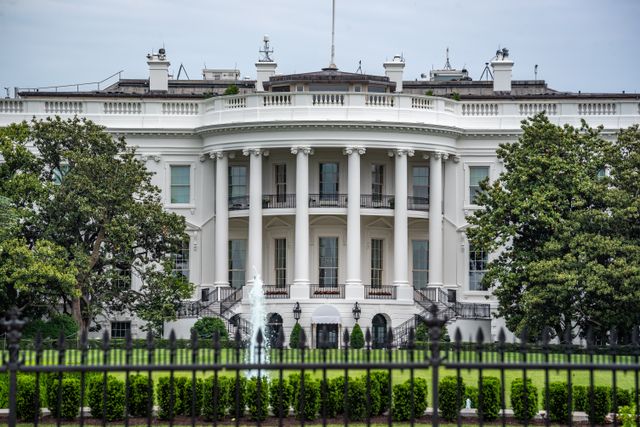
Iowa Legislators Advocate for Federal Role in AI Regulation
Representative Zach Nunn and State Senator Sarah Trone Garriott, both from Iowa, agree that the federal government must take an active role in regulating artificial intelligence. This stance highlights a growing conversation in the United States about how to balance technological innovation with public protection.
ByAndreea Blidar4 min read
Republican Representative Zach Nunn and Democratic State Senator Sarah Trone Garriott, both from Iowa, agree that the U.S. federal government should take significant responsibility for regulating artificial intelligence. This was reported by The Des Moines Register. This alignment of views, coming from legislators of different parties, reflects the broader debate about the need for clear boundaries and guidelines for this rapidly evolving technology.
Artificial intelligence has advanced rapidly in recent years. This has led to more voices in the political sphere calling for a legal framework to oversee it. The discussion centers on how to ensure these tools serve society without creating unexpected risks or injustices.
Why the Need for Federal Regulation?
AI doesn't recognize state borders. An application or system developed in one state can affect people across the entire country, and even worldwide. For this reason, many argue that fragmented, state-by-state regulation would be ineffective and create a patchwork of rules difficult for companies to navigate. A federal law could offer a uniform and more coherent approach, facilitating innovation while ensuring certain basic protections for all citizens. This builds on discussions about how midterm elections could redefine AI policy in the country.
Additionally, there are significant concerns about the use of AI in sensitive areas such as data privacy, algorithmic decision-making (for instance, in credit or employment), and national security. These topics require coordination and authority that only the federal government can provide.
Key Challenges Regulation Aims to Address
One of the most debated points is how AI can affect personal privacy. AI systems often need large amounts of data to function, and how that data is collected, stored, and used is a central concern. Federal regulations could establish clear standards for protecting personal information.
Another challenge is algorithmic bias. If the data used to train an AI system reflects human or historical prejudices, the system can perpetuate or even amplify them. This can lead to unfair outcomes in areas such as hiring, criminal justice, or access to services. Legislators are seeking ways to ensure AI systems are fair and transparent, and that they can be audited to identify and correct potential biases.
Security is another critical point. AI systems could be vulnerable to attacks or malicious uses, with serious consequences. Federal regulation could drive security standards for AI development and deployment, reducing these risks.
The Role of Legislators and the Path Forward
The stance of legislators like Zach Nunn and Sarah Trone Garriott shows that the discussion about AI regulation is not exclusive to one party. Both acknowledge that this technology raises complex questions that require a coordinated response. Their views reflect a growing consensus that industry self-regulation alone might not be enough to address all challenges.
The path toward federal AI regulation will be a long one. It will involve debates over which agency should oversee which aspects, whether rules should be very specific or more general, and how to avoid stifling innovation. The government has already shown interest in this issue, with reports of officials from an AI testing agency potentially joining the White House to assist with these initiatives.
Why it matters
The position of Iowa legislators like Zach Nunn and Sarah Trone Garriott on the need for federal AI regulation is a clear indicator that this issue has moved to the forefront of the political agenda in the United States. Their comments highlight the growing interest in finding a balance between the promise of AI innovation and the necessity of protecting citizens from its potential risks. What is decided at the federal level in the coming years will have a profound impact on how artificial intelligence is developed and used across the country.
Script for your video
Runs about 41 secMake short videos? This script sums up the story so you can read it off your teleprompter and record a Reel, a Short, or a TikTok.
Title for your video
Unlikely Alliance: Democrats & Republicans Unite on AI
How to use it
- 1Pick the length — 1 or 2 minutes — and tap “Copy script.”
- 2Paste it into the teleprompter app on your phone, or read it off the screen.
- 3Record vertically and post it to Reels, Shorts, or TikTok.
It's free to use, and you can monetize your video. We only ask that you say where you read it: the script already ends with “The full story is on losupe.com.”
Sources
TopicsAIRegulationTechnologyPoliticsIowaUnited States