Over a Century of Coaxial Cables: 7 Facts About the Wire That Connected the World
Discover the fascinating history of coaxial cable, from its use in transatlantic telegraphs in 1858 to its key role in television and early internet networks. Though fiber optics now lead, coaxial laid the foundation for modern communication.
ByPedro Llerena6 min read
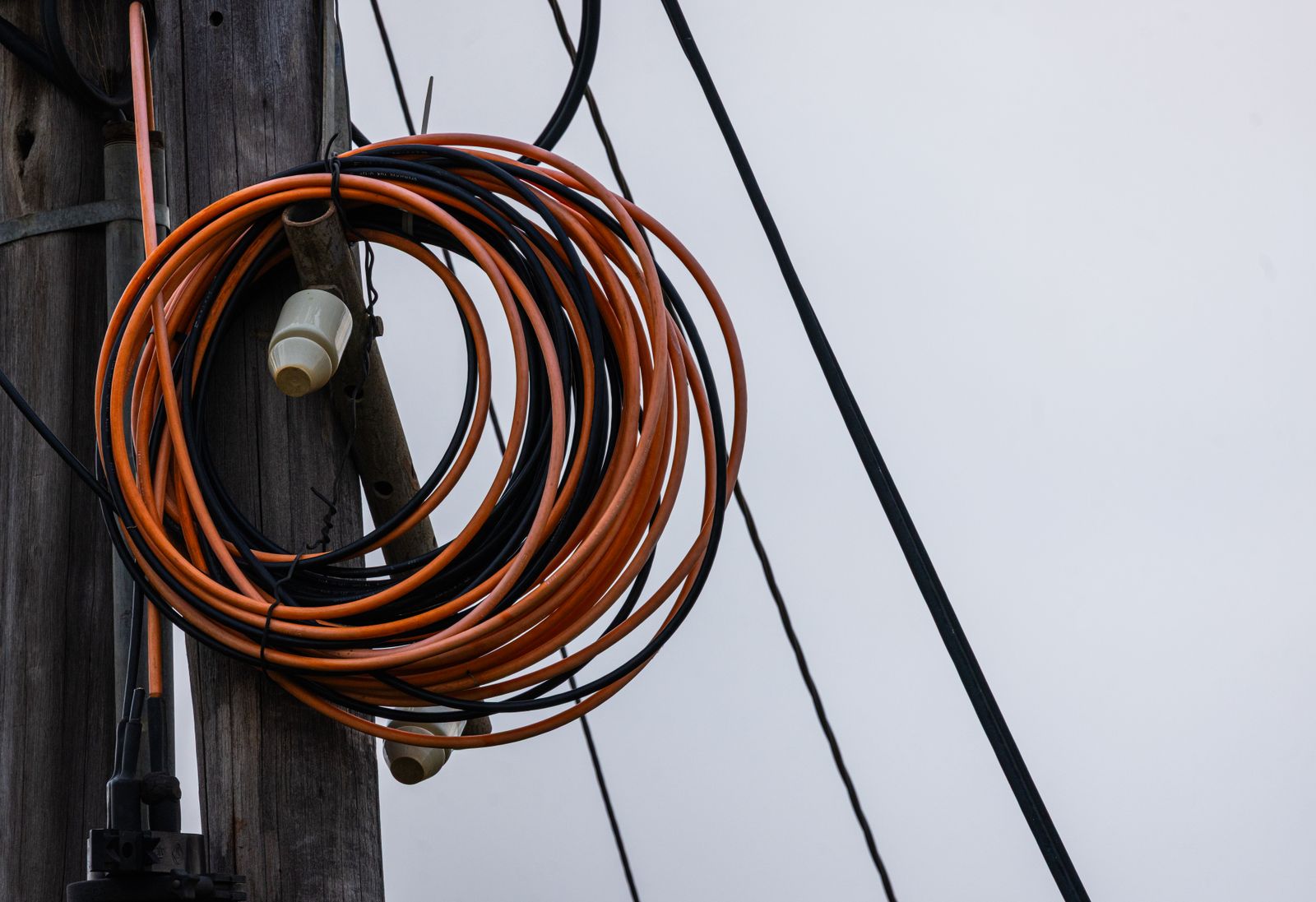
The coaxial cable, that thick wire we've seen connecting TVs and modems, has a fascinating history that goes back long before the internet even emerged. While fiber optics now grab headlines for their speed, for over a century, coaxial was the silent champion that brought us television, radio, and the first data networks. It's easy to take it for granted, but its innovations laid the groundwork for much of modern communication.
Here are 7 surprising facts about this ingenious invention that, without much fanfare, connected the world.
An Idea That Preceded Its Theory
Picture this: an invention already in use before anyone fully explained its underlying theory. That's exactly what happened with the coaxial cable. Although its theory wasn't described and patented until 1880 by electrical engineer Oliver Heaviside, the coaxial cable was already in service much earlier. It was used in the first transatlantic telegraphic cables starting in 1858, as Wikipedia explains. It's quite astonishing to think that such an advanced technology for its time was implemented based more on practical experimentation than on a complete theoretical understanding from the outset.
This goes to show that necessity often sparks invention. Engineers of that era found an effective solution for transmitting signals over long distances across the ocean, even if the mathematical formalization and optimal design of that cable type were yet to come. This curious timeline highlights the ingenuity and daring of early telecommunications pioneers.
Oliver Heaviside: The Visionary Who Patented It
While the cable was already in use, it was Oliver Heaviside who shaped the concept and patented it in 1880. This English electrical engineer and mathematician demonstrated how his coaxial cable design could eliminate the interference that plagued parallel cables, a significant problem in signal transmission, according to the same Wikipedia entry. His work was not just a technical advancement, but a crucial foundation for developing clearer and more reliable communications.
Heaviside's patent marked a turning point in how cables for information transmission were designed and understood. His vision allowed electrical signals to travel with much greater fidelity, paving the way for the long-distance television and telephone services we would come to know decades later.
A Smart Design: Two Cables in One
What makes coaxial cable so special? Its design. It's made up of two concentric conductors: a central core that carries information and a tubular outer conductor, known as the mesh or shield, which serves as a ground reference. Between them, there's a dielectric insulating layer, and the entire assembly is protected by an outer jacket, as Wikipedia details. It's an ingenious system where each part plays a specific role in ensuring signal quality.
This design is no accident. The separation between the core and the mesh is key; if they were to touch, it would cause a short circuit that would ruin data transmission. This structure not only makes it resilient but is also the main reason it can handle high-frequency signals without issues, something simpler cables cannot achieve.
The Invisible Shield Against Noise: The Protective Braid
The mesh surrounding the central conductor of a coaxial cable is more than just a current return path. It's a genuine shield against electrical noise. This braided metal mesh absorbs stray electronic signals and external interference, preventing them from reaching the core where important data travels. This way, information remains clean and free from distortion, as the free encyclopedia explains.
For environments with significant interference, there are even "quad-shielded" coaxial cables, which feature two insulating foils and two layers of braided mesh. This characteristic was one of the reasons coaxial became so valuable for reliably transmitting data over long distances, long before alternatives like fiber optics were even considered.
Outperforming Twisted Pair for Long Distances
In the past, when cables were needed to transmit signals over long distances or with large amounts of data, coaxial was the preferred choice over twisted pair cable. Its construction made it much more resistant to interference and signal attenuation, meaning information traveled further and with higher quality. Wikipedia highlights that this made it a good option for reliably supporting large amounts of data with a simple system.
This advantage was critical for early computer networks, such as older Ethernet versions (10BASE2 and 10BASE5), and for interurban telephone networks. It was the perfect solution for maintaining signal integrity over routes where other cables simply couldn't perform, helping to lay the groundwork for the communications infrastructure we now take for granted.
The Ubiquitous "TV Cable"
If you've ever connected an antenna to your TV or had cable or internet service at home, it's highly likely you've used a coaxial cable. It has been the undisputed star in urban cable TV and internet networks, and also in video signal distribution, where the RG-59 or RG-6 type is often used, especially for home use outside of Europe, according to Wikipedia's information.
This omnipresent cable brought us television and facilitated internet access in many homes for decades. If you want to remember what things were like before, you can read this article about digital television or this one about the beginnings of the internet, and you'll see how coaxial was always there, working silently.
Passing the Torch to Fiber Optics, But Still Relevant
Although the coaxial cable has been a workhorse in telecommunications, in recent years it has been gradually replaced by fiber optics, especially for distances exceeding several kilometers. This is because fiber optics offer significantly superior bandwidth and are ideal for increasingly higher frequencies and the digitalization of transmissions, according to the same source.
However, coaxial hasn't entirely disappeared. It remains common in the "last mile" of internet connections, reaching our homes, and in many applications where its interference resistance and cost-effectiveness keep it relevant. It's a clear example of how technology evolves, but well-established foundations continue to have their place.
Why it matters
The story of the coaxial cable is a reminder of how innovations, even seemingly simple ones, can change the world. From the first transatlantic telegraphs to television and the internet in our homes, this cable has been a vital bridge for information. While fiber optics may be today's star, coaxial taught us the importance of clean and reliable data transmission, laying the groundwork for everything that followed in telecommunications.
Script for your video
Runs about 44 secMake short videos? This script sums up the story so you can read it off your teleprompter and record a Reel, a Short, or a TikTok.
Title for your video
Coaxial Cable: The Unsung Hero That Connected The World
How to use it
- 1Pick the length — 1 or 2 minutes — and tap “Copy script.”
- 2Paste it into the teleprompter app on your phone, or read it off the screen.
- 3Record vertically and post it to Reels, Shorts, or TikTok.
It's free to use, and you can monetize your video. We only ask that you say where you read it: the script already ends with “The full story is on losupe.com.”
Sources
TopicsTechnologyHistoryTelecommunicationsCoaxial CableInternetTelevision