Michael Jackson's "Thriller": The Secret History Behind the Halloween Classic Epic Records Hesitated to Release
Michael Jackson's iconic track "Thriller," which every October revives on Halloween playlists, has a creation story full of surprises. From a very different initial title to the recording of Vincent Price's legendary monologue, the song almost didn't see the light of day as a single.
ByPedro Llerena5 min read
Every October, Michael Jackson’s “Thriller” rises from the dead to take over Halloween playlists, reminding the world of the lasting power of a great song. More than four decades after its release, it remains one of the most recognizable recordings in pop history. However, the story behind this classic is full of curiosities and decisions that almost kept it out of the spotlight, especially the contribution of the legendary Vincent Price, whose voice and laugh have become synonymous with the song.
The track, which we now associate with zombies and werewolves, had a much brighter origin. Songwriter Rod Temperton initially conceived it as “Starlight,” a cheerful melody with little connection to horror. But it was Michael Jackson’s vision for the cinematic and a touch of darkness that transformed this initial concept into the Halloween anthem we know today, according to That Eric Alper.
From "Starlight" to a Cinematic "Thriller"
Rod Temperton, a name already known for his work on Jackson classics like "Rock with You" and "Off the Wall," was the mastermind behind "Thriller"'s composition. His goal was to create something theatrical and dramatic, inspired by Jackson's fascination with film. Before settling on the definitive title, other options like “Midnight Man” were on the table. Temperton even worried that “Thriller” would be an awkward word to sing, but Jackson's performance turned it into an instant hit.
The lyrics, surprisingly, were written in just a couple of hours once the concept and title were settled. The magic of the production fell to the legendary Quincy Jones, who helped transform Temperton’s ideas into a recording filled with inventive sounds and precise rhythms. The song was recorded in 1982 at Westlake Recording Studios in Los Angeles, as part of the sessions for the album of the same name, but it wasn't released as a single until late 1983 and early 1984.
The Orchestration of Fear: Sounds and Synthesizers
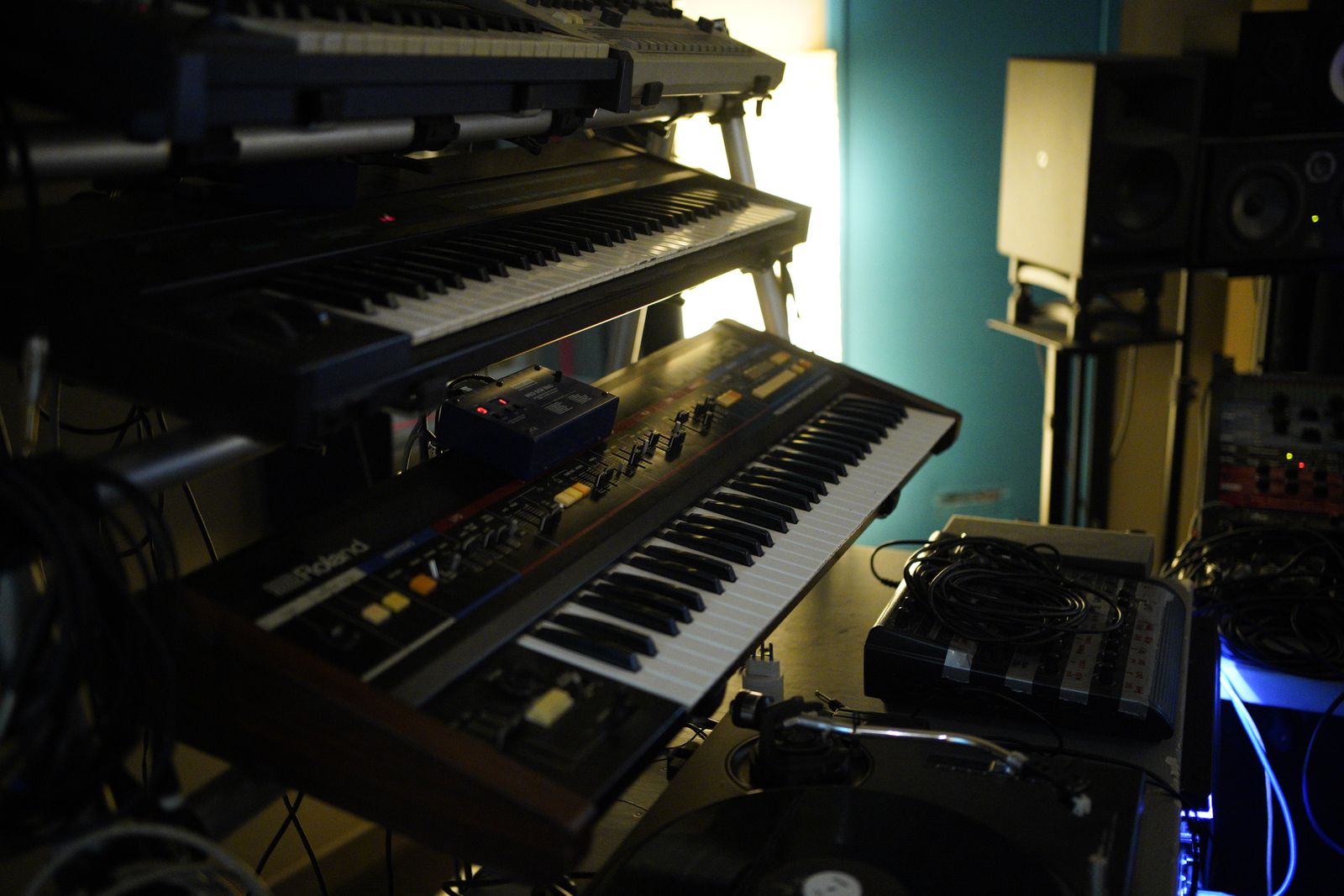
The musical foundation of "Thriller" was built around a catchy bassline, which Temperton found after experimenting with bass and drum patterns. This groove served as the foundation for the entire melody and arrangement. The song moves at approximately 118 beats per minute, a wonderfully danceable tempo, even if it's with monsters. That distinctive synthesizer bassline was played on a Roland Jupiter-8, one of several synthesizers, including the Roland Jupiter-4, ARP 2600, Minimoog, and Prophet-5, used to create the track's unusual sonic textures. The studio was, in essence, a laboratory of electronic sounds.
The creepy sound effects were key to the atmosphere. Thunder, footsteps, wind, a creaking door, and howling wolves set the mood before Jackson’s vocals carry the story forward. Engineer Bruce Swedien even rented special sound-effects doors from Universal Studios to record their squeaky hinges. Curiously, a real dog refused to howl for the recording, so Michael Jackson himself recorded the wolf sounds, combining them with effects-library recordings. Background vocals were even recorded in a shower stall to achieve a particular sound. Swedien experimented by recording Jackson's vocals at different distances from the microphone and using multiple doubled performances, achieving a vocal sound with an almost three-dimensional feel.
The instrumentation went beyond synthesizers. Greg Phillinganes contributed synthesizer and Rhodes piano parts, while David Williams added the guitar, giving "Thriller" its distinctive combination of funk, pop, and dance music. Beneath that famous bassline, there's a richness of instrumental detail that many casual listeners might not realize. It even features a horn section arranged by Jerry Hey, with musicians including Gary Grant, Larry Williams, and Bill Reichenbach Jr., creating a remarkably complex arrangement for a song often remembered for its electronic elements, as reported by That Eric Alper.
Vincent Price: The Voice of Terror That Almost Wasn't
One of the most iconic elements of "Thriller" is Vincent Price's spoken-word monologue at the end of the song. However, Price wasn't Temperton's initial idea. The songwriter wanted a recognizable horror voice, but it was Peggy Lipton, then Quincy Jones's wife, who suggested the famous actor. In an unexpected twist, Temperton wrote Price's eerie section in a taxi on his way to the studio. Price, with decades of horror-film experience, delivered his part with remarkable efficiency, in just two takes.
His sinister laugh, which closes the recording, has become one of pop music's most famous endings. Decades later, that sound remains instantly recognizable and has cemented the song as a cultural pillar, much like we discussed in this note about the economic impact of cultural phenomena.
A Success the Record Label Doubted
Despite its overwhelming success, Epic Records initially considered "Thriller" too unusual to release as a single. Executives saw it as a novelty record and questioned whether audiences would embrace a song about monsters. History, however, provided a resounding answer.
"Thriller" became the seventh and final single from the album, and its release helped revive the album's momentum when sales began to slow in 1983. Manager Frank DiLeo suggested releasing it with an ambitious music video, which further propelled it. The single first arrived in the United Kingdom in November 1983, followed by the United States in January 1984. Although it did not reach No. 1 on the US Billboard Hot 100 (it peaked at No. 4), it marked an unprecedented achievement as the seventh top-10 hit from the same album. Internationally, however, it did reach No. 1 in countries like France, Belgium, Portugal, and Spain, proving that monsters, indeed, travel extremely well.
Why it matters
"Thriller" is not just a song; it's a cultural phenomenon that has transcended generations. Its creation story reveals the artistic audacity of Michael Jackson, Rod Temperton, and Quincy Jones in transforming an unconventional idea into a global hit. The record label's initial hesitation and Vincent Price's iconic contribution are reminders of how vision and experimentation can challenge expectations and create enduring works of art that redefine genres and capture the world's imagination.
Script for your video
Runs about 48 secMake short videos? This script sums up the story so you can read it off your teleprompter and record a Reel, a Short, or a TikTok.
Title for your video
Thriller: The untold story of how the classic almost failed
How to use it
- 1Pick the length — 1 or 2 minutes — and tap “Copy script.”
- 2Paste it into the teleprompter app on your phone, or read it off the screen.
- 3Record vertically and post it to Reels, Shorts, or TikTok.
It's free to use, and you can monetize your video. We only ask that you say where you read it: the script already ends with “The full story is on losupe.com.”
Sources
TopicsMichael JacksonThrillerMusicHalloweenVincent PriceMusic History