6 Surprising Facts About the Early Internet Few People Know
When we think of the internet, we often see it as a current phenomenon, but its early years were quite different. From how it changed journalism to nascent concerns about personal data, we reveal some details that mark its evolution.
ByPedro Llerena5 min read
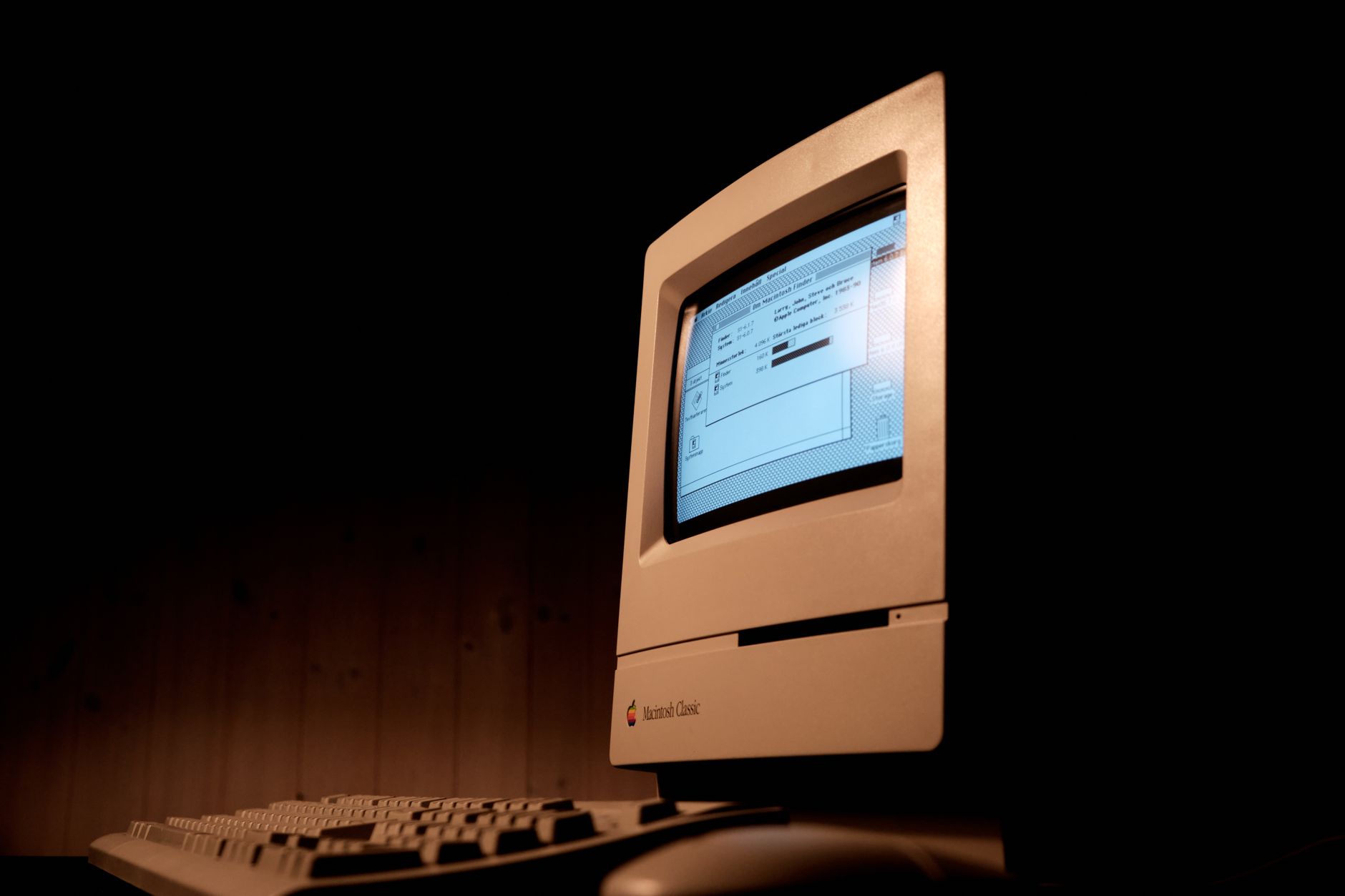
The internet has transformed how we live, work, and communicate, but do you remember what it was like in its early days? Although we take it for granted today, its initial years were full of innovations that laid the groundwork for the digital world we know. Revisiting those beginnings helps us better understand the journey we've taken.
Here are some facts you might not know about how the web began to weave its history, considering its impact on fields like journalism and personal data privacy.
1. Digital Journalism Was Born with the Internet in 1994
Before the mid-1990s, how we received news was very different. We relied on printed newspapers, radio, or television. However, everything changed with the arrival of the internet. It was in 1994 that the internet marked the beginning of a new stage for journalism, as mentioned in the history of journalism.
This year not only signified a new dissemination channel but a true turning point. It began the transition of journalism, which had been largely “industrial” during the 20th century, to a completely “digital” era. This opened doors to immediacy and global reach that traditional media could not match.
2. The Web as the New "Canvas" for News
Initially, the idea of using the web for journalism wasn't just about transferring printed content to a screen. Wikipedia explains that digital journalism or cyberjournalism “uses the web.” This involved exploring a medium with unique capabilities: hyperlinks to delve deeper into topics, multimedia elements (images, sounds, videos), and the ability to update information instantly.
In those early years, communication professionals were discovering how to tell stories in this new space. The web offered an interactivity that previous media lacked, allowing readers to participate in ways previously unimaginable. It was a time of experimentation and a redefinition of what it meant to “report the news.”
3. The Early Era of Personal Data Without Clear Regulations
One of the big differences between today's internet and its early days is how personal data was handled. When the web began to gain popularity, the strict regulations we have now didn't exist. Directive 95/46/EC, the predecessor to the current General Data Protection Regulation (GDPR), was enacted in 1995. This means that the internet's early years operated with relative freedom regarding personal information management.
This lack of a clear legal framework created an environment where data collection and use were much less supervised. Over time, the need to protect user privacy became evident, a necessity that the internet, as a space for massive information exchange, made urgent. The GDPR, applied in 2018, is a clear example of how society had to adapt to the implications of digital life.
4. Europe Reacted Quickly: A Personal Data Law as Early as 1995
Although the internet was just beginning to spread to the general public in the mid-90s, the European Union showed remarkable foresight by enacting Directive 95/46/EC on October 24, 1995. This was one of the first major pieces of legislation on personal data protection in the digital world, long before most users even had an internet connection at home, as noted by Wikipedia on GDPR.
This early legislative response highlights how European authorities quickly recognized the challenges the new digital era posed for individual privacy. It set a precedent and laid the groundwork for the GDPR, which is now a global benchmark. It shows that concern for our data is not new but has evolved with the network itself.
5. The "Digital Economy" Was More a Promise Than a Consolidated Reality
Today, we talk about the digital economy as a fundamental engine of the world, where personal data holds immense economic value. However, in the internet's early years, this idea was in its infancy. Wikipedia on GDPR mentions that the regulation emerged in “an era where the economic value of personal data is increasing in the digital economy.” This implies that, at its inception, the internet was not primarily perceived as a gigantic machine for monetizing information.
The curiosity lies in the fact that, while the network infrastructure was being built, the true economic potential of data was still a distant vision. It was a gradual process that led personal information to become such a valuable asset, driving the need for regulations like the GDPR. If you want to know more about how the web works today, you can read our guide on how to publish your website in the cloud.
6. The Internet Forged a Global Model for Data Regulation
Initially, the internet was imagined as a borderless space, a digital "wild west." However, the global nature of the network itself led to the need for regulations that transcended national boundaries. The General Data Protection Regulation (GDPR), born in Europe, has become a model for similar laws in countries like Chile, Brazil, Japan, and many others worldwide.
This universalization of privacy standards reflects how the internet forced countries to think about digital governance on a global scale. What started as an experimental network became a force that redefined sovereignty and the protection of individual rights in an interconnected world.
Why it matters
These early steps of the internet, from how it transformed news communication to how the first ideas about data privacy were conceived, show us that its evolution has been a constant path of adaptation. What was initially a technological novelty quickly became a social and legal challenge. Understanding where we come from gives us a better perspective on where we are heading in this digital age, where innovation continues to generate new questions and solutions.
Script for your video
Runs about 49 secMake short videos? This script sums up the story so you can read it off your teleprompter and record a Reel, a Short, or a TikTok.
Title for your video
Internet in 1994: Did You Know How Digital Journalism Was
How to use it
- 1Pick the length — 1 or 2 minutes — and tap “Copy script.”
- 2Paste it into the teleprompter app on your phone, or read it off the screen.
- 3Record vertically and post it to Reels, Shorts, or TikTok.
It's free to use, and you can monetize your video. We only ask that you say where you read it: the script already ends with “The full story is on losupe.com.”
Sources
Topicsinternethistorytechnologydigital journalismprivacy