60 Years Ago, Star Trek Premiered on NBC: 8 Surprising Facts About its Debut and the Network
Discover eight curious facts about Star Trek's premiere on NBC six decades ago, from its origins to its cultural impact and the secrets of the network that made it possible.
ByPedro Llerena7 min read
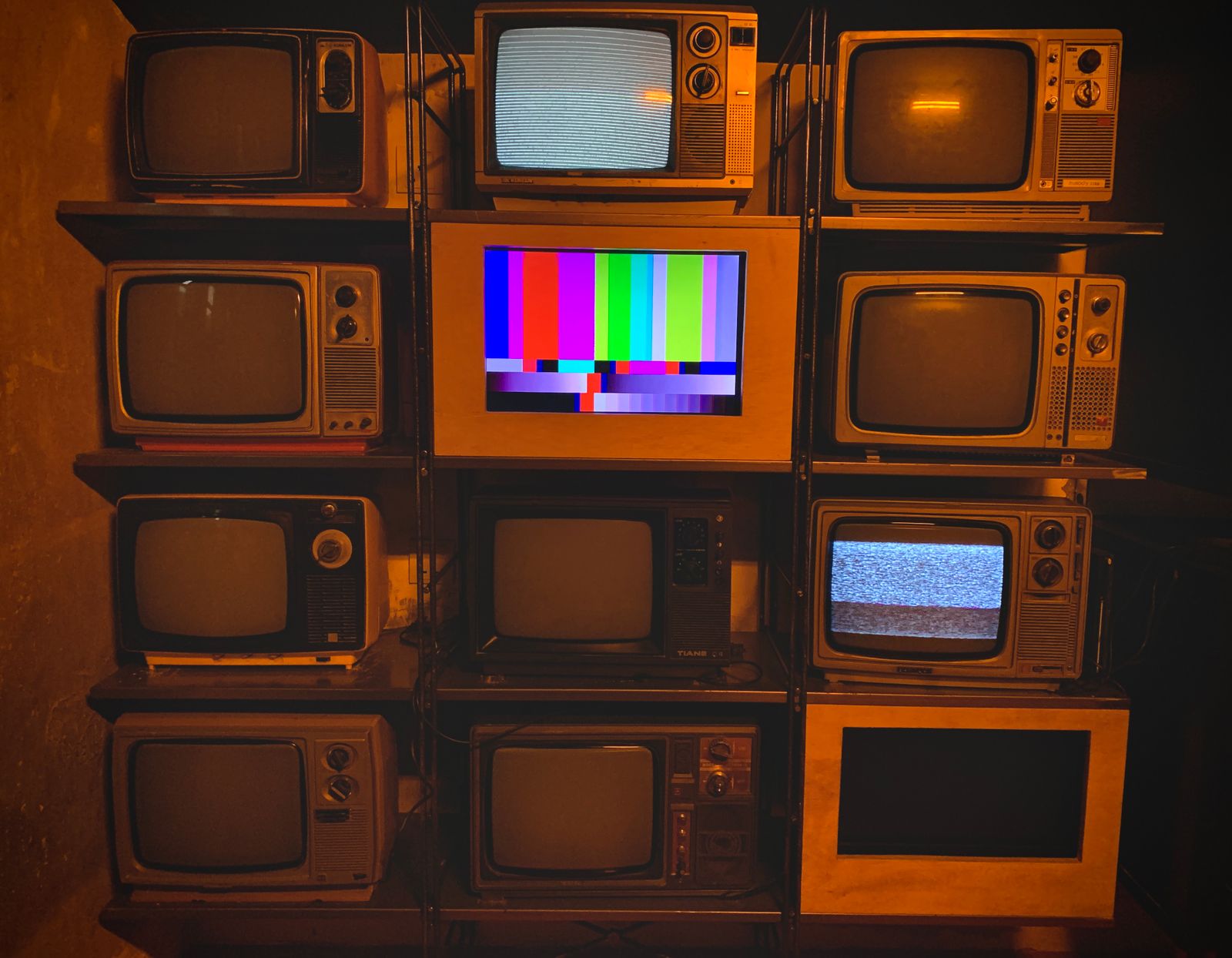
In the fall of 1966, American television was about to change forever. NBC, one of the nation's oldest networks, was premiering a science fiction series that, unbeknownst to anyone at the time, would become a global pop culture cornerstone. We're talking about Star Trek: The Original Series, a production that, 60 years later, remains a benchmark. Its impact went far beyond the screen, touching on social and technological themes that still resonate today.
The debut of Star Trek on NBC on September 8, 1966, was just the beginning of a fascinating journey, both for the starship Enterprise and for the network itself. Here are eight curious facts about this television milestone and the channel that made it possible.
1. NBC: The Pioneer Network with a Century of History
The National Broadcasting Company, or NBC, is no ordinary network. Founded in 1926 by the Radio Corporation of America (RCA), it is the oldest major broadcasting network in the United States, with nearly a century of existence. Its history mirrors the evolution of media in the country, transitioning from radio to television and adapting to each new era.
Over the years, NBC has changed hands multiple times. It was born under the General Electric (GE) umbrella, then went through RCA, and later returned to GE ownership. It also had a period under Vivendi, and today it is a division of NBCUniversal, which in turn is a subsidiary of Comcast, a telecommunications giant, as detailed on its Wikipedia page. This trajectory shows how large corporations have shaped entertainment over the past decades.
2. The Peacock: A Symbol of Color Television
If you think of NBC, the iconic peacock logo likely comes to mind. This emblem, which earned the network the nickname "Peacock Network," isn't just a pretty design. It was created with a very specific purpose: to promote color broadcasts. In the 1960s, when color television was a novelty, the peacock, with its vibrant feathers, was a visual way to communicate the chromatic experience NBC offered, inviting viewers to see television in a whole new way.
The idea was clear: if you saw the peacock, you knew you were about to enjoy programming with a full color palette, a luxury at the time. This logo became synonymous with modernity and visual quality, helping the network stand out in a market still transitioning from black and white.
3. Star Trek Premiered First in Canada
Although Star Trek is an icon of American television, the first episode of Star Trek: The Original Series didn't air in the United States. In fact, its world premiere took place in Canada, on September 6, 1966, on the CTV channel. It was two days later, on September 8, 1966, that the Enterprise finally made its appearance on NBC screens in the United States, according to Wikipedia. It's a small detail often overlooked, but it highlights the early globalization of media.
This Canadian head start is a curiosity few know about one of history's most significant franchises. It shows that, even in the early days of modern television, international distribution already played a role, even if only with a 48-hour difference.
4. A "Wagon Train to the Stars" with a Hidden Message
Gene Roddenberry, the creator of Star Trek, described the series to executives as an "outer space Western," or "Wagon Train to the stars," to make it an easier sell. However, privately, his ambitions were much deeper. Roddenberry drew inspiration from works like Jonathan Swift's "Gulliver's Travels" and the film "Forbidden Planet," intending for each episode to work on two levels: as an exciting adventure story and as a moral tale.
He wanted to use the science fiction genre to explore and critique the social issues of his time in a way that wouldn't be possible in a contemporary drama. This duality is one reason why Star Trek transcended pure entertainment and became a cultural phenomenon with a message. As we discussed in this article, the way stories are told and ideas are conveyed has always evolved with technology.
5. The Multiracial Cast That Challenged Norms
In 1966, having a multiracial cast on American television was almost unthinkable. Yet, Star Trek broke barriers by featuring characters like Lieutenant Nyota Uhura (Nichelle Nichols), a Black woman in a position of authority, or Hikaru Sulu (George Takei), an Asian officer. Gene Roddenberry insisted on this diversity, despite network objections, which feared for the show's "marketability," according to his Wikipedia biography.
This commitment to inclusion not only made Star Trek a reflection of the ideals of a future society but also turned it into a beacon for the civil rights movement in the United States. The series showcased a future where racial and gender differences were no impediment to collaboration and leadership, something revolutionary for its time.
6. 1960s Allegories Hidden in Space
Beyond adventure, Star Trek served as a platform to address thorny issues of the 1960s. Roddenberry confessed that by creating "a new world with new rules," he could make statements about "sex, religion, Vietnam, politics, and intercontinental missiles." If he talked about "purple people on a distant planet," the network "never caught on," being more concerned with actresses' "cleavage," as cited on Wikipedia.
Thus, the series explored war and peace, loyalty, authoritarianism, racism, and sexism through its stories, using alien metaphors to critique contemporary society without being censored. This cleverness allowed progressive messages to reach millions of homes.
7. The Iconic Five-Year Mission and Its Voice
Every episode of Star Trek: The Original Series began with a voice-over that has been etched into collective memory. It was that of Captain James T. Kirk, played by William Shatner, who stated the purpose of the USS Enterprise: "Space: the final frontier. These are the voyages of the starship Enterprise. Its five-year mission: to explore strange new worlds, to seek out new life and new civilizations, to boldly go where no man has gone before."
This declaration not only introduced the plot but also defined the essence of the series: exploration, discovery, and the pursuit of new horizons. The five-year mission became a symbol of human ambition and the promise of a future where curiosity leads us into the unknown, an ideal that continues to inspire today.
8. A Multi-Billion Dollar Franchise
What began as a television series with only three seasons has transformed into one of the largest and most profitable media franchises of all time. With estimated revenues of $10.6 billion, Star Trek encompasses films, spin-off series, video games, novels, comics, and even theme park attractions and museum exhibitions, according to Wikipedia.
This phenomenon not only demonstrates the power of a good story but also the devotion of its fans, known as "Trekkies" or "Trekkers." The franchise has maintained its relevance over decades, expanding its universe and attracting new generations, proving that its messages of hope and exploration are timeless.
Why it matters
The 60th anniversary of Star Trek's premiere on NBC reminds us how a science fiction series could, and still can, influence culture and collective thought. It not only gave us memorable space adventures but also invited us to imagine a more diverse, peaceful, and technologically advanced future. It's a legacy that goes beyond entertainment, encouraging us to explore not only outer space but also the possibilities of humanity.
Script for your video
Runs about 43 secMake short videos? This script sums up the story so you can read it off your teleprompter and record a Reel, a Short, or a TikTok.
Title for your video
Star Trek: 60 Years of Impact. Its Debut and NBC Network.
How to use it
- 1Pick the length — 1 or 2 minutes — and tap “Copy script.”
- 2Paste it into the teleprompter app on your phone, or read it off the screen.
- 3Record vertically and post it to Reels, Shorts, or TikTok.
It's free to use, and you can monetize your video. We only ask that you say where you read it: the script already ends with “The full story is on losupe.com.”
Sources
TopicsStar TrekNBCtelevisionscience fictionhistorycuriositiesGene Roddenberrypop culture