10 Surprising Facts About Conflicts Shaping Our Present and Future
Conflicts in Ukraine, Gaza, and the Strait of Hormuz are more than just headlines: they hide data that reminds us of their profound impact. From their historical duration to the human and economic cost, there are details you might not have known.
ByMerry Melina8 min read
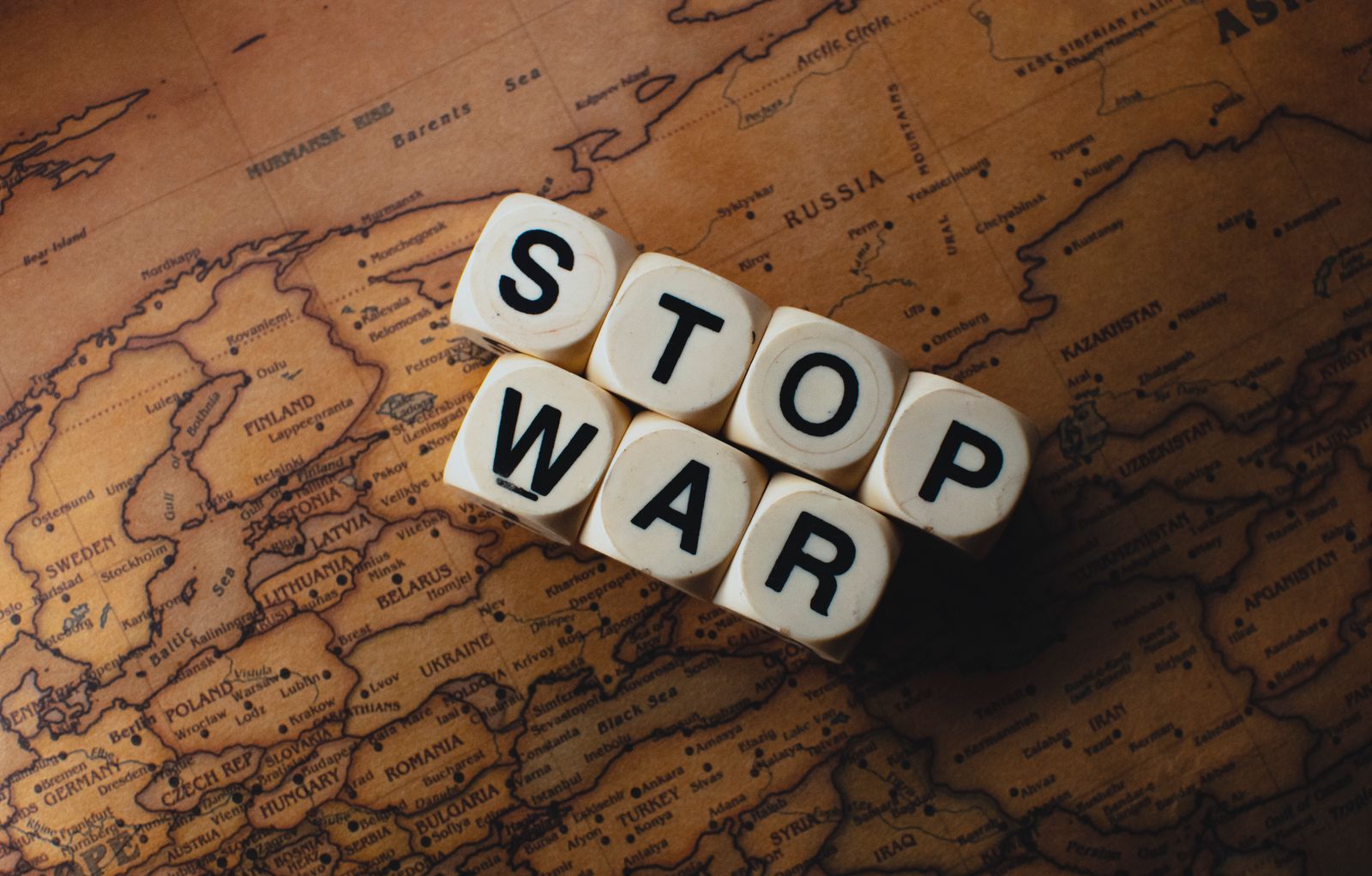
When we think about the conflicts shaking the world, it's easy to stick to the biggest headlines. But behind every news story are facts and figures that give us a clearer idea of their true scale and how they affect all of us. From wars that drag on for years to global economic crises triggered by geopolitical tensions, these facts help us understand the present and think about what's next.
Here are ten surprising facts about some of the most relevant conflicts today and in the near future, which will make you see them differently. These are not just numbers; they are pieces of stories that invite us to reflect on the complexity of our world and understand why these situations are so important. If you're interested in this topic, we encourage you to also read this article for more surprising facts.
1. The Ukraine conflict is Europe's longest war since the Cold War
We know the war in Ukraine is a constant topic in the news, but you might not have considered its duration. Since late February 2014, this conflict has been active for over 12 years, 7 months, and 23 days, according to Wikipedia. This makes it the longest-running military confrontation in Europe since the Cold War, a fact that highlights the persistence and complexity of the situation.
Its origin dates back to the suspension of the EU-Ukraine Association Agreement and the outbreak of the Euromaidan protests, which led to the flight of then-Ukrainian President Viktor Yanukovych. Since then, the conflict has escalated, transforming into a full-scale war that has redefined international relations in the region.
2. The war in Ukraine has one of the broadest lists of international support
The list of countries and organizations supporting the parties in the Ukraine conflict is astonishing in its extent. On one side, Russia has received support from Belarus, North Korea, Iran, South Ossetia, and Syria. This diversity of allies shows how the conflict has intertwined with geopolitical interests from various regions of the world, according to Wikipedia.
On Ukraine's side, support is even broader, including NATO, the European Union, the United States, the United Kingdom, Australia, Canada, Germany, France, Spain, Poland, Norway, South Korea, Japan, Israel, Moldova, Romania, and Georgia. Even factions of the Russian and Belarusian opposition and Chechen separatists have joined. This level of multifaceted support is a clear indicator of the conflict's global strategic importance.
3. 83% of Palestinian casualties in Gaza are civilians
The war in Gaza, which began on October 7, 2023, has taken a devastating human toll. A particularly stark fact is that, of the 74,494 registered Palestinian deaths, 83% are civilians. This includes more than 20,179 children and over 10,000 women, according to Wikipedia information. This disproportion highlights the conflict's impact on non-combatant populations.
In addition to deaths, over 175,604 people have been injured. These figures force us to look beyond general numbers and understand the magnitude of human suffering in a region already hit by decades of tension.
4. More than 360,000 homes and hundreds of medical and educational facilities destroyed in Gaza
The destruction in the Gaza Strip goes far beyond the lives lost. The conflict has left a trail of material devastation that has wiped out a significant part of the infrastructure. According to Wikipedia, more than 360,000 housing units have been destroyed, along with 368 educational facilities, 370 medical centers, and 203 places of worship. This scale of destruction is overwhelming and has a lasting impact on the lives of survivors.
Adding to this is the interruption of essential services such as water and electricity supply, exacerbating the humanitarian crisis. Indiscriminate attacks, denounced by various UN bodies, have affected entire neighborhoods, leaving thousands homeless and without access to basic services.
5. The International Criminal Court has issued arrest warrants for leaders on both sides of the Gaza conflict
An unprecedented fact in this conflict is the action taken by the International Criminal Court (ICC). On May 20, 2024, Prosecutor Karim Khan requested arrest warrants for Israeli Prime Minister Benjamin Netanyahu and his Defense Minister Yoav Gallant, along with three Hamas leaders, Yahya Sinwar, Mohamed Deif, and another, for alleged war crimes and crimes against humanity. The warrants were issued on November 21, 2024, according to Wikipedia.
This decision, which places leaders of a recognized state and those of an armed group on the same level, is a legal milestone that seeks to hold those responsible for serious violations of international law accountable, regardless of their side.
6. Israel was added to the UN blacklist for wartime sexual violence in May 2026
Another highly impactful fact was Israel's inclusion on the United Nations blacklist of countries that commit wartime sexual violence. This addition was made in May 2026, according to Wikipedia. It is important to note that Hamas was already on that list. This measure highlights growing international concern over such crimes in the context of the conflict.
The United Nations Office for the Coordination of Humanitarian Affairs has denounced that Israel is not complying with international law by blocking humanitarian aid in Gaza, leading to a critical situation for the civilian population.
7. The 2026 Strait of Hormuz crisis was triggered by the assassination of Iran's Supreme Leader
The 2026 Strait of Hormuz crisis, a future conflict already documented on Wikipedia, erupted from a critical event: the assassination of Iran's Supreme Leader, Ali Khamenei, by the United States and Israel. This airstrike, which occurred on February 28, 2026, was the spark that ignited one of the most significant energy crises in modern history.
In retaliation, Iran blocked the Strait of Hormuz, a vital maritime route, and launched missile and drone attacks against Israel, US military bases, and allies in the Persian Gulf. This event shows us how political and military actions in one region can have rapid and devastating global consequences.
8. The Strait of Hormuz blockade disrupted 25% of global oil trade
The consequences of the Iranian blockade of the Strait of Hormuz in 2026 were immediate and global. This maritime route is crucial for world trade, as approximately 25% of the world's oil and 20% of its liquefied natural gas (LNG) pass through it. The closure, according to Wikipedia, almost completely paralyzed tanker traffic.
This fact gives you an idea of the strategic importance of this strait and how a regional conflict can have a direct impact on the economy of all countries, affecting everything from transportation to industry and households.
9. Brent crude oil price surpassed $100 per barrel in 2026 and set a historic monthly increase record
The disruption of energy supply due to the Hormuz blockade had an immediate effect on global markets. The price of Brent crude oil exceeded $100 per barrel on March 8, 2026, for the first time in four years, reaching a peak of $126 per barrel. Even more surprisingly, the largest monthly increase in crude oil prices in history occurred in March 2026, as detailed on Wikipedia.
This price surge demonstrates the fragility of global energy supply and how an event in a specific region can generate economic waves felt in every corner of the planet, affecting everyone's wallet.
10. The 2026 Hormuz crisis was the largest global energy supply disruption since the 1970s
The Strait of Hormuz crisis was not only a significant event due to its immediate consequences but also because of its historical relevance. Wikipedia describes it as the largest disruption to global energy supply since the 1970s energy crisis, and the largest in the history of the global oil market. This means that the 2026 event set a precedent for how conflicts can alter global markets.
In addition to oil and gas, other commodity markets such as aluminum, fertilizers, and helium also experienced supply problems and price increases. This widespread impact on various industries illustrates the interconnectedness of the global economy and how sensitive markets are to geopolitical tensions.
Why it matters
Armed conflicts, whether current or future, have an echo that extends far beyond the borders of the countries directly involved. The figures and facts we've shared remind us that wars not only leave a trail of human suffering but also alter the global economy, international politics, and the daily lives of millions of people. Understanding these facts allows us to have a more complete view of our world and how we are all connected.
Script for your video
Runs about 40 secMake short videos? This script sums up the story so you can read it off your teleprompter and record a Reel, a Short, or a TikTok.
Title for your video
Gaza, Ukraine, Hormuz: Shocking facts you didn't know!
How to use it
- 1Pick the length — 1 or 2 minutes — and tap “Copy script.”
- 2Paste it into the teleprompter app on your phone, or read it off the screen.
- 3Record vertically and post it to Reels, Shorts, or TikTok.
It's free to use, and you can monetize your video. We only ask that you say where you read it: the script already ends with “The full story is on losupe.com.”
Sources
TopicsConflictsGeopoliticsUkraineGazaStrait of HormuzEconomy